John Clare and the climate emergency

In many ways, John Clare seems to be the poet of the modern environmental movement. We have cause to elegise the Swordy Well that he himself lamented. It was turned into a landfill site, before being trimmed and preened into a nature reserve. A teeming of panpsychist urge must have moved Clare to imagine Swordy Well – an enclosed limestone quarry – with its own voice:

                Petitioners are full of prayers

                To fall in pitys way

                But if her hand the gift forbears

                Theyll sooner swear than pray

                They’re not the worst to want who lurch

                On plenty with complaints

                No more then those who go to church

                Are eer the better saints

                I hold no hat to beg a mite

                Nor pick it up when thrown

                Nor limping leg I hold in sight

                But pray to keep my own

                Where profit gets his clutches in

                Theres little he will leave

                Gain stooping for a single pin

                Will stick it on his sleeve

That Clare wrote outdoors, using his hat as a desk, makes the idea of the enclosed quarry bemoaning his (her, their?) hatlessness more impotent. Clare’s poetry is full of the speaking, divine voice of the natural world: “The voice of nature as the voice of God, / Appeals to me in every tree and flower.” This is a nature-connectedness that emerged before the coining of the term “ecology” and before the modern realisation of the quantitative metrics pertaining to our destruction of the natural world.

Celebrating the beauty of common land is intrinsic, in turn, to celebrating the biodiversity that it gives way to. Clare’s many poems in praise of living birds in their natural environment, divorced from the symbolic networks and cerebral ideas of transcendence that they were linked to by poets like Percy Shelley (in “To The Skylark”, for example) – like “The Nightingale’s Nest” (bidding us ‘hush’ as we enter into its private dwelling) and “To the Snipe” (celebrating the poem as a “lover of swamps”) – provides, so it might seem, an energetic imperative to preserve the biodiversity of our frail earth.

This is my own version of what is now a kind of stock argument, made from George Monbiot to Paul Farley. Invited recently, indeed, to an interdisciplinary talk series, run by St. Leonard’s College at St. Andrews, I chose to rehash this argument in pretty much exactly these terms. I was first, titling my talk “John Clare and the climate emergency.”

And then the sting. A man asked me, “What does John Clare have to do with the climate emergency”? I waffled something; how “a vision of biodiversity” gives us an overweening urge to protect the planet. Then followed the next two talks; a presentation on carbon capture in the ocean, and a talk on how to interpret whale-song, the serious business of studying the natural world.

I recall mentioning that Clare was interested in natural history, the forerunner to modern science, and was even working on “The Natural History of Helpstone” (Helpston being his local village, which he viewed as warranting natural study.) I also faintly remember muttering something about a “moral impulse” in science. But this is a paradox; as I was reminded, science is the objective and quantitative study of the laws that guide our universe.

I’ve been thinking a lot since this talk series, indeed, about the broader question of what exactly art in general has to do with anthropogenic climate change. I remember giving the answer that Clare encouraged us to “engage with the natural world”, to “listen to birdsong”. The tidal waves of talks discussing the imminent loss of species that we face, however, mean that perhaps engaging with the natural world is not enough. Perhaps all any poetry should be saying is “we are so screwed”, a sort of dispondaic anti-paean.

Regardless, we cannot get into bird’s nests as John Clare did. One of the best ways to find the snipes (the ungarish wading birds) that Clare addressed is a sewage farm, as Paul Farley tells us; unofficial locations birdwatchers travel to in order to catch glimpses of rare birds. (I had a moment like this in the hotel I work in; pied wagtails are nesting above the lobby, which I am the ambassador of. Birds knocked off course will not necessarily gravitate towards our official nature reserves.)

 Besides, Clare laments the practice of taking birds’ eggs, but he is known to have had a pioneering collection therein, and to have collected birds’ eggs for local natural historians. Clare also couldn’t afford meat, as a member of the agricultural peasantry, but never declined it when it was offered to him. XR veganism, for example, would have made no sense to him.

There are many ways that I do believe, however, that Clare allows us to be more conscious and responsible members of the ecosystem we inhabit. I think some of these are just purely accidental, due to Clare’s consistent extreme poverty. Clare was perpetually low on paper, to the extent that he sometimes wrote on tree bark. Some very fine versets are scrawled upon other manuscripts, untitled little gems that fit unconventionally in the modern poetry scene, which demands titles, anthologies:

[on Peterborough Manuscript B8, R114]

                & the world is all too made for thee such much ado deare

                & the world be a rude world

                was there a nook in which the world had never been to sere

                That nook would prove a paradise when thou & love would near

                & there to pluck the blackberry & there to reach the sloe

                How joyously & quietly would love thy partner go

                Then rest she weary on a bank where not a grassy blade

                Had neer been bent by brambles feet & love thy pillow made

I know that as a poet finding these pearls, and how pointedly they are written on existing manuscripts, in a desperate, palimpsestic mode, has influenced my own practice. I now write poetry habitually on the back of receipts, Megabus tickets, envelopes, fish-and-chip packets, and on PhD notes (the most extreme of all, perhaps.) I suppose this is a clear example of aesthetics turning into practice: that John Clare is making me notice the potential (to delve into corporate parlance) of the littered scraps of paper that are reproduced automatically in our universe.

The fact that John Clare saw no distinction between poetry and natural history (indeed, felt  more comfortable in the latter) is also crucial to climate change. It’s not enough to be still and ruminate, or to loiter, but nor is it enough to study; we need a holistic (accused corporate parlance) attitude, as the poet-scientist might offer us. Clare has influenced poet-scientists, such as David Morley (see, for example, his Gypsy and the Poet, which uses Clare as a springboard to appreciate the natural world.) And then there is the land politics, and the resistance to enclosure, which allows us to imagine a different way of perceiving our world, beyond as a mere resource. One of the best poems on this theme is simply titled ‘Enclosure’, celebrating that which is uncultivated, structured almost as a fairy-tale:

                Far spread the moory ground, a level scene,

                Bespread with rush and one eternal green,

                That never felt the rage of blundering plough,

                Though centuries wreathed spring blossoms on its brow.

                Autumn met plains that stretched them far away

                In unchecked shadows of green, brown, and grey,

                Unbounded freedom ruled the wandering scene;

                No fence of ownership crept in between

                To hide the prospect from the gazing eye;

                Its only bondage was the circling sky.

                A mighty flat, undwarfed by bush and tree,

                Spread its faint shadow of immensity,

                And lost itself, which seemed to eke its bounds,

                In the blue mist the horizon’s edge surrounds.

This “faint shadow of immensity” becomes impossible to convey within the orthodoxies of syntax and grammar, from time to time. This leads one to insist most on what Clare supplies the modern climate change movement – a determination to, at least in moments of glittering insight, write ourselves out. Many have commented on Clare’s descriptive impulse – where his role as a speaker in his poems is minimised – but the more-than-human nature of Clare’s work can be seen most readily in ‘The Progress of Rhyme’, in which he descends (ascends?) into onomatopoeia, foreshadowing Hopkins, in order to approximate the song of nightingales (rather than dismissing it as the lorn cries of Philomel):

                And nightingales – oh, I have stood

                Beside the pingle and the wood,

                And o’er the old oak railing hung

                To listen every note they sung,

                And left boys making taws of clay

                To muse and listen half the day.

                The more I listened and the more

                Each note seemed sweeter than before,

                And aye so different was the strain

                She’d scarce repeat the note again:

                ‘Chew-chew chew-chew,’ and higher still:

                ‘Cheer-cheer cheer-cheer,’ more loud and shrill:

                ‘Cheer-up cheer-up cheer-up,’ and dropt

                Low: ‘tweet tweet jug jug jug’ and stopt

                One moment just to drink the sound

                Her music made, and then a round

                Of stranger witching notes was heard,

                As if it was a stranger bird:

                ‘Wew-wew wew-wew, chur-chur chur-chur,

                Woo-it woo-it’: could this be her?

                ‘Tee-rew tee-rew tee-rew tee-rew,

                Chew-rit chew-rit,’ and ever new:

                ‘Will-will will-will, grig-grig grig-grig’

                The boy stopt sudden on the brig

                To hear the ‘tweet tweet tweet’ so shrill,

                Then ‘jug jug jug,’ and all was still

(a pingle is a small piece of enclosed ground in Northamptonshire dialect.)

(I remember, in the fantastic talk about whale-song, the idea that whales are not singing but rapping is addressed. There is a lovely arrythmia to Clare’s onomatopoeia here.)

(‘The Lament of Swordy Well’ is taken from Tom Paulin’s The Faber Book of Vernacular Verse. ‘Enclosure’ and ‘The Progress of Rhyme’ are taken from J.W and Anne Tibble’s Selected Poems.)

On tipping I

I’ve worked in the luxury hotel sector casually for about a week, in one of my many painful iterations of self, and have received a few tips as a concierge. When I’m sent on some errand to the less visible parts of the hotel, however, I’m struck by how unequal the procedure of tipping most probably is. There is the laundrette, where continuous hard work is taking place unseen by any of the clientele but is less “customer-facing”. There’s also the housekeeping, who surely don’t have the opportunity to mop up tips.

Tipping certainly has no place in a socialist economy, and even when workplaces share tips, they’re shared within the context of (from what I understand) one individual team. This means no tips for the various invisible people who make our world function, who we cosmeticise out of view. I’m obviously thinking symbolically of the hotel. Careworkers, however, must subsist largely on minimum wage, with no prospect of tips in sight. When I worked in care, for years, I did not receive one tip, and had to work long night shifts in order to elevate my income to something more in line with a “living wage”. There are also millions of underpaid workers with no prospect of being tipped – TAs, cleaners, etc. etc. They are barred from the dubious honour of being able to be tipped possibly because of not personally dealing with the wealthy, because of their inability to provide sustained banter (this could be because of a disability), or because they do not provide the temporary paroxysm of banter, but a more sustained and sensitive social service (dealing with the vulnerable, for example.)

In reality, though, the minimum wage will never be adjusted by particularly reckless governments in line with inflation, so that makes me appreciate the practice of tipping more. It’s one of the only examples of “trickle-down” economics, but a sort of presenteeist trickle-down. If tips were able to be shared equitably among everyone, then one imagines that society would be slightly more equal. Alternatively, the government could just intervene to make everything a little more equal.

https://www.waterstones.com/book/poems-sketched-upon-the-m60/sam-hickford//9781912412334

TBC

This house believes Oxford is a sinking ship

I can present only an experiential argument, but it’s a persuasive experiential argument nonetheless. When I started my BA at York, I loved how expansive and close-knit the community was. In addition to lectures, there was a functioning rural campus with a student-run co-op, a society that ran allotments, and a sort of squashed-together nest of brutalism that encouraged and practically demanded you to engage with the most reprehensible of arseholes. While still extremely immature, I grew up not in the sense that I attended lectures on fashionable critical theory, but that I learned how to cook, that I had enough time and space to volunteer in programmes scattered through the actual city of York. Between all of that, I met friends in pubs, read and wrote a lot, and learnt my alcohol threshold.

This was in such contrast to Oxford, where I did an MSt. I came, excited, and had so many interesting conversations, attended so many fascinating lectures and talks. Maybe it was because I had “done stuff” in the interim, but I felt deeply constrained by the collegiate system, where one’s college often has the stultifying arrogance to proclaim it can organise your whole social life for you, that it can arrange expensive package catering deals for you, that it can be your entire world and your whole extra-curricular life. In contrast to York – where I had enjoyed having an expansive life across a small campus, making stupid decisions like signing up to be a life-drawing model – I felt Oxford as a kind of prison, where I was kept docile and deradicalised by the odd feeling that I was still a boy in school about to be put in detention.

This setting can’t be very conducive to growing up. And then there’s the Bodleian, which technically has every book, but doesn’t let you take them out, and so you’re forced to hobble around different libraries to get what you need. And then there’s the fact that Oxford itself functions as a sort of gated community for the students, while the actual residents of the town are pushed into the suburbs, giving you an entirely constrained world.

I say this not because I have some kind of anti-Oxbridge fury. I feel completely at peace with Oxford’s existence, and do not have any preening desire to blockade it. I say it instead because at other universities there is a tired cliché of ‘Oxbridge rejects’, which needs to be dismantled. Since beginning a PhD at St. Andrews, I have felt so much more positive and expansive than I did at Oxford. Finally, there is one main library where I can actually take out books (because I have the neuroticism to still read physical books), there is a beautiful setting (Oxford’s obvious beauty is obscured by its confusion; a pot-pourri of architecture slobbered together.) Perhaps most importantly, St. Andrews is a ‘traditional’ university that is actually and functionally engaging with the climate crisis. While Oxford colleges lap up donations from climate change deniers and ne’er-do-wells, during matriculation, we are helpfully pointed out where to get a bag of organic produce, where to grow vegetables on campus, how to curb greenhouse emissions. [even if one does not believe in the climate emergency or whatever, this is doubtlessly helpful advice.]

St. Andrews is obviously not perfect, but it shows a ‘traditional’ university can adapt to obvious global concerns, have a bit of a moral compass, and still be as ‘traditional’. I believe, from a couple of seconds of being here, this is why St. Andrews has overtaken Oxford and Cambridge in the Times’ completely arbitrary student survey. And yet one meets countless people in institutions like St. Andrews that seem to be desperate for the traditional Oxbridge experience.

It’s indeed true that such a value is attached merely to the trochees ‘Oxford’ and ‘Cambridge’, and that the production of these syllables can lead various employers to be slightly more positively disposed to you. But this should not be the case, perhaps is somewhat only the case because various colonialists murmured the same syllables in antique dialects to justify their atrocities (I’m aware that lots of good people went to Oxbridge.) Again, I bear no ill will to these two higher education institutions, but I just think the time has come to stop associating them with some kind of mystical wisdom and intelligence. They are just higher education institutions, that’s all.

Some thoughts on autism

In World War II, children with the newly-conceived “autism” were identified by Hans Asperger. They were woefully insufficient in Nazi German spirit (geist) and systematically put to death in concentration camps. The whole category of “autism” was part of the general drive to purge undesirable people. While many boys were saved by Asperger, it is told that he had a particular dislike of the girls, who he considered unredeembably geistless, and warranting lethal injection.

Asperger’s work was revived in the 1990s, and divorced of its political content. “Autism” became what we know it today: an apparent tool for understanding people with unusual thought processes and obsessions. The previously-executed autists are now studiously overdefined as people with limited “social-emotional reciprocity”, as well as a “restricted and repetitive pattern of interests/activities”. Autists are an accepted part of disability discourse, whose social incapacities are meticulously accommodated for.

When I was 15, I was told I had “Asperger’s Syndrome”. It was put into my medical notes that I did not accept it, as if it was something entirely intrinsic, not devised in the context of a fascist regime. The admonition that it might be something to be questioned was not acceptable.

I ignored it. Eventually, trying to re-engage with the idea that I was “autistic”, or that I was on the “autistic spectrum”, I attended support groups, facilitated by the University of York’s disability team. I was frequently derided in these groups for believing God exists, or not conforming to a discernible pattern of “autistic interests”.

Is autism real? What about neurotypicalism, or neurotypical disorder – why not this way around? Are people with autism allowed to reshape what it is, rather than just be told by a clinical hierarchy? I have wondered all of this ever since learning that autism was a tool for genocide. As a category, perhaps resembling the movement for complicating sexuality, it should be taken out of the control of clinicians.

(Buy my collection, Poems Sketched Upon the M60): https://www.waterstones.com/book/poems-sketched-upon-the-m60/sam-hickford/9781912412334

(Order a personalised copy: e-mail me at sam.hickford@yandex.com)

Do u lyk my poetix

Is there a middle-point between mass production and sending manuscripts to your mates? If the Elizabethans did indeed have a stigma of print, then we now have a complete astigmatism, as we blindly churn out endless new releases in our printing turrets. What if, even in this framework, we somehow managed to make each book meaningfully individual and personalistic? Can we? What if we sent the same set of poems and essays to everyone, collected in the same volume, yet there was always a twist, some additional Easter Egg, just a little quirk or chink to ensure that we can’t fully automate literary production!?

I did have an idea, in the course of trying to get people to purchase Poems Sketched Upon the M60. It’s essentially an idea that makes the whole process into a meditation. This is something akin to the lamentably named “found poetry”. Every single time someone actually does buy a copy of my collection, I force myself to write a completely and wholly individual poem for them somewhere in the collection. I oblige myself to do this even if I know very little about them, and some of the poems I’m most proud of are the people I know nothing about. At a recent dinner party, I had a conversation with some bloke about the Latin origins of the word “mellifluous”. He gave me a tenner to purchase the collection, and I knew little about the inner workings of his mind. Thus, I wrote a poem called “Mellifluous”, refashioning a lot of what was uttered into something resembling a metrical scheme, which I then lost forever when I actually gave it to him the next week (I was invited back, despite bringing nothing and drinking vast quantities of beer. I resolved to bring something next time, in what I now realise is a fairly constant social protocol.)

I have been thinking a lot about “found poetry” because I recently audited a module on language poetry and the twentieth century American avant-garde. Third-year undergraduates, taking a break from canonical figureheads like Chaucer, were studying literary extremists like Kenneth Goldsmith, one of whose poems simply consists of a typed-out copy of the New York Times. He proceeded to teach this creative method at the University of Pennsylvania, where he penalised undergraduates for showing any iota of creativity.

While I can’t share in this, stumbling into poets who deal in “found poetry” did set me off into an alternative set of reflections. I am now acutely aware of how much blank space there is in the world. I think this is related to how intensely easy it is to manufacture a book these days: to press its gatherings together, to attach its spine, to give it some comatose existence. There are many silent pages found in business textbooks, government white papers, and Vatican codices. All of these are just yearning for someone to write some metrically-precise reflection on them. John Clare, for example, could get to work on a piece of paper pretty fast, writing a pretty acceptable ballad on a salvaged handbill extremely quickly. He was genuinely short of paper, and so relished the opportunity to have just anything at all that he could write upon. Imagine what the combined force of Romantic poets (even just) could do with all the blank paper that is currently strewn across the Crystal Palace in Glasgow (where I happen to be writing this.) One could squeeze at least one actually quite good sonnet horizontally from the bit of the menu that says ‘Breakfast’, and a pantoum on the leaflet bearing the title “Table Service”. This is not even to mention all of the totally pointlessly-used paper you could find if you went into the Staff only area. The same drab rotas, perhaps some silly letter to all staff from some draconian manager.

I don’t know, and can only imagine, but the point is that one local Wetherspoons can be turned comfortably into not just poetry, but good poetry. I don’t mean finding phrases and appropriating them, I mean reflecting on the entire spatio-temporal context of the documents we find, and writing poetry about them in the white space. The secret liaison that is occurring between two people on the rota, which has reached classical intensity. The fish and chip meal that contributed to someone’s death in The Counting House in Glasgow the last month; another soul’s passage to the after-life. It’s overwhelming to think about. We must remember that many of the poets of the past, apart from when they were trying to be neat and tidy, managed to cram multiple good poems into one tiny page. Just look at the manuscripts! Hopkins drafted ‘Binsey Poplars’ on the back of a handbill. Imagine if he had access to the vast stock of paper today – I’m sure the Society of Jesus use far more paper than they used to, in printing out MS Word documents for missions, cleaning rotas for religious houses. God knows what else.

Receipt-poems ought to become a genre. The receipt bears the imprint of a time, a place, and is pretty much always printed with the intervention of someone, even if it’s someone who ensures the machine is working successfully, or someone who writes the computer code. Given that so much poetry today is splintered from any details of time and space, and given how lavishly and excessively we are using paper (which comes from trees, which we are deforesting at a vast rate), we basically have a Kantian duty to write perfectly-crafted poems on the back of receipts. In doing so, we should be conscious of every single space. If there is indeed a bit of space, this should be the very image of a caesura: a Robert Browning dramatic monologue baddy pausing in half-reflection of the sins he has committed, and how God might just not actually forgive them just because he went to confession last week. The receipt becomes our vehicle not to appropriate random bits of text and figure, but to seriously interrogate the endlessly complex psychological circumstances in which a receipt is created. To restore, to convert to verse, to converse.

We are not going to destroy “capitalism” like this. If I had one poetic absolute, however, it would be to infuse the world with sensitivity, with the idea that words matter beyond just sound-bites, consumer talismen, and they can be arranged mythically. Rahul Gupta first introduced me to the idea that the Logos might be just about possible into today’s word-saturated World. I am painfully aware that we cannot avoid the way in which words issue necrotically from the body-politic. So let’s stare at the vomit, clean it up, and then, instead of just regurgitating the vomit, re-tile and polish the floor.

You can still buy Poems Sketched Upon the M60 here: https://www.waterstones.com/book/poems-sketched-upon-the-m60/sam-hickford/9781912412334 Or send me an e-mail, sam.hickford@yandex.com, if you’d like to order a personalised copy.

Squidiography – Bullshit Jobs – Part 2

https://s.abcnews.com/images/GMA/200329_gma_ault2_hpMain_16x9_992.jpg

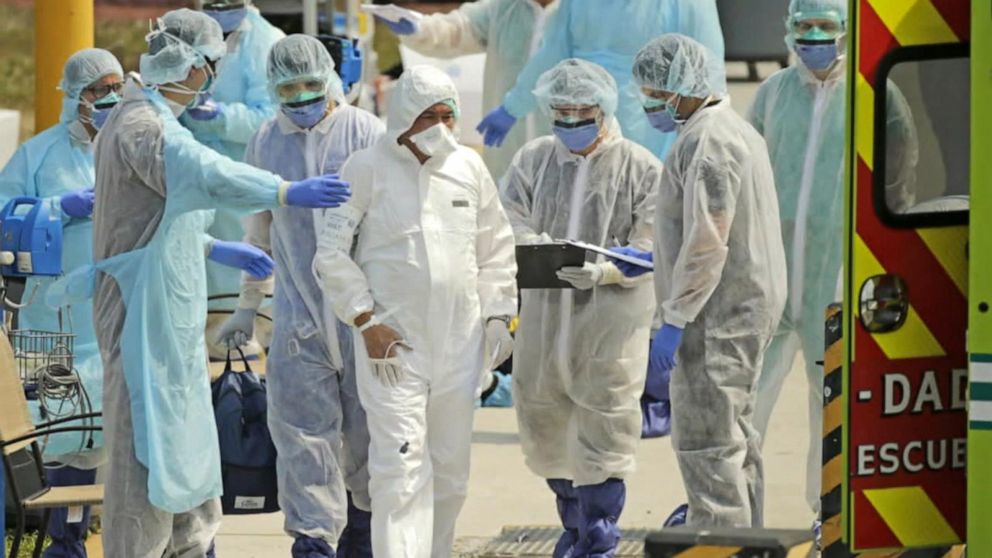
Graeber responds to the relationship between the COVID-19 pandemic and his tantalising notion of a “bullshit job”. His article in politico.eu suggests the tangible ways in which we have seen the visceral and stunning veracity of his analysis. To cut it short, the self-isolating media has presented us dogmatically with so many scenes of real people, really working, “local heroes” (in what is essentially propaganda speak), leaving their house and actually carrying out genuine tasks in the real world. Many of these have been traditional heroes, that society loves to celebrate and somehow fails to pay a decent wage (and, actually, increasingly even fails to provide with temporary work.) Doctors, nurses, teachers, paramedics. Then there have been the people who society totally depends on, but whose jobs have always been dismissed, or seen as stop-gaps in other projects. Supermarket workers, farmers, cleaners, etc. These were the only people who were ever doing any tangible work all along, even before the pandemic. Everyone else had jobs that existed in complicated legal and political networks. They were largely placeholders, and their jobs were often to self-consciously participate in the masquerade of the “economy”. In other words, they looked busy and preened, but it was an open secret that they were never doing anything at all. If they were doing a single thing, it was largely looking important, participating in needlessly complicated chains of delegation, and using bizarre and meaningless management word-salad in order to justify their frail existences. For Graeber, Coronavirus has illuminated this obvious reality, this open secret.

The reality of this analysis is testified to the endless scenes that are regurgitated in the media. Endlessly, we are presented with the sheer novelty of scenes of people “working” – actually doing stuff in the physical world. These scenes, in of themselves, are part of the Bullshit Job Economy. They are foisted upon us by a media that, in turn, is comfortably self-isolating, and many of the media personnel who reproduce and discuss “real work” are better off than the foolish and plague-catching “real workers” they depict. Similarly, politicians – who have been unable to physically debate issues and to look important in public – celebrate and debate “real work” and “real workers” from the comfort of their own living rooms. All of this reinforces the contradictions of the modern economy. It shows a managerial, professional and political class increasingly divorced from the reality of anyone who does “real work”. They are literally physically distanced from the organisations they manage and govern. They cannot access them since they have no genuine reason to be there.

Zoom has become a bete noire in this wonderful contradiction. I remember working as a care worker in the latter half of 2019, and observing the strange new role that Zoom had begun to undertake. Meetings used to be a roll call of people who were at least visibly there, and seemed to be doing something, even if it was just being present in an office. Now, meetings are exposed as what they are. They are self-perpetuating meetings. Many of the people who schedule and convene Zoom meetings are those comfortably self-isolating and who have high salaries. In the meantime, the actual workforce – the “essential workers” who have been doing the actual work during Coronavirus – have been subjected to these meetings, many of which have had no tangible relationship to the workplaces they inhabit. The result is really odd disassociation between management and what have often been termed “key workers”. Those who have had bullshit jobs have been given clearly better deals (or what have been perceived to be better deals) than being forced into the world to catch and transmit Coronavirus for less money and a temporary job.

In the mean time, Universal Basic Income – which is one of Graeber’s tentative policy recommendations – has been increasingly part of UK political debate. It has made so much more sense. Actually, as a care worker, I felt extremely sorry for the middle management. Coronavirus had deprived them of the opportunity of having meaningful jobs. In the past, their one solace was that they got to interact with the people the organisation cares for, and that made working in an administrative or managerial capacity worthwhile. Now, I felt increasingly like they were confined to, or imprisoned in, Bullshit Jobs, and there wasn’t much they could actually do about it. They were locked into a kind of existential struggle, in which nobody was looking over their shoulder and yet they had to fight to justify their existence, to themselves.

Consider if so many of the people who had actually deserved the privilege and desire of doing nothing had been able to do so. Consider if the world had a functioning and consistent welfare system, in line with the reality of the post-industrial economy. Perhaps the Coronavirus pandemic has allowed us to resist utopianism and confront the contradictions of the economy we live in.

Do not, under any circumstances, ‘clap for carers’

Carers have extremely difficult and demanding jobs, it is true, and we all need to “pull together” and “support each other” in these times. However, it is a shame to say that the true problems that carers are faced with right now cannot be clapped out of existence, they are simple institutional problems that could be remedied by effective action by politicians, who invest far too much time in supporting “clapping for carers” and insufficient time actually doing anything to make carers’ lives slightly bearable at the moment.

I worked as a carer for half a year in London during this pandemic. The rotas frequently and unavoidably consist of carrying out a dizzying battery of split shifts, sleep-overs, and ten or twelve-hour long shifts. Some days consist of starting work at 7.30 AM and finishing work at 9 PM, with a little window in the middle in which you are “off” but not in any meaningful sense. The effect is a basically permanent lethargy. (This was a very generous employer.)

Strange and convoluted hours are an unavoidable reality of caring for people. However, this is combined with the traditionally bad wages for carers, who earn far, far less than people sat at home self-isolating and working 9-5 from the comfort of their own homes. This is in spite of the many different phenomena they have to worry about in this pandemic. They could pass COVID-19 to vulnerable people, killing them. They could themselves easily become infected with COVID-19, especially in bigger care homes. In addition, and perhaps hardest of all, they must try to explain and elaborate the COVID-19 pandemic to the people they care for (“support”, in contemporary parlance.) They must explain why they can’t go out and see their families. They must explain why nobody was able to visit them on Christmas. They must explain why they can only see their friends and loved ones on a Zoom call. It is extremely difficult to explain to someone who is highly progressed in dementia suffering

Instead of ‘clapping for carers’, then, I urge you to demand higher wages for carers. I also urge you to encourage anyone working as a carer right now to join a union. Union penetration in the “care sector” is extremely low, and carers can join UNISON, who are determined to fight for their interests. I urge you to fight for a systematic end to zero-hours contracts, which many care workers must still contend with. I urge you to ask the government to fund the NHS properly, which is, by definition, the government’s job. This could be done, for example, by not spending quite so much on, for example, the military, since we very famously can’t nuke COVID out of existence. (I believe military spending increased in the last budget, the government evidently determined that shooting the virus with an AK-47 is the best course of action.) What carers need right now is not a patronising pat on the back, a sort of impersonal “well done”, but structural changes that make their lives easier. I have never felt encouraged by people ‘clapping for carers’, but I know I would be encouraged by such structural changes.

COVID-19, social care, systematic destruction of the environment

I worked for approximately half of this year as a Support Worker for people with learning difficulties, in two Assisted Living facilities in London. One of the most depressing dimensions of this for me has been the endless volume of plastic waste, spurred ceaselessly by the COVID-19 pandemic, and the way in which any focus on (or discussion about) the climate emergency has been sidelined by the pandemic. The law has promulgated that we use disposable masks endlessly, changing them several times per day in the course of our shift in order to “protect ourselves” and the people we care for. In reality, this is a totally warped and human-driven notion of “care”, since it causes relentless damage to the ecosystem and kills non-human life. It is not difficult to find pictures of sea-birds trapped in the plastic trinkets we use to protect ourselves. It is “anti-social” care, as opposed to “social care”, because it involves an anti-care for the ecosystem in which we originate and emerge from, and makes all of our activities possible.

The COVID-19 pandemic is inextricably linked to climate change: the two are inseparable. Much of the world population lives in heavily-polluted environments. If urban centers become less polluted, this will reduce complications from global pandemics. Health and social care – which is usually mysteriously off the hook – accounts for 39% of public sector carbon dioxide emissions. Thus, it has been a tragic year for the environment. It has been tragic for policy-makers, for the government, and for regulators, to so radically sideline the climate as to make it a non-issue. The COVID-19 pandemic should have alerted those who arrange the choreography of our social and health care systems to the essential truth that these systems depend on the health of the global ecosystem. In reality, all they have done is cauterised the COVID-19 wound with a gigantic toxic plastic plaster.

Companies are rushing to create biodegradable PPE products, and most medical supplies providers offer at least gloves designed to biodegrade in landfill. Yet I have seen and heard nothing about the urgency for, at the very least, adopting these products in the face of the climate emergency. 2021 should be the year in which the health and social care sector – enabled by government regulation – confronts its environmental responsibilities.

All the Pokémon are dead

stanler
Stantler

In Pokémon Ruby and Sapphire, we are told of Stantler, one of the Gold and Silver Pocket Monsters, “Stantler’s magnificent antlers were traded at high prices as works of art. As a result, this Pokémon was hunted close to extinction by those who were after the priceless antlers.” Stantler’s other PokéDex entries allude to how precious its various parts are, as a commodity. (The Pokémon universe somehow makes a distinction between catching a Pokémon, and hunting it.) “The round balls found on the fallen antlers can be ground into a powder that aids in sleeping.”

Stantler’s appearance – with its large antlers and its cloven hooves – clearly allude to the caribou. The caribou has been hunted by indigenous people for generations, but its antlers are used in larger-scale hunting operations as an aphrodisiac in international illicit markets. One species of caribou – the Queen Charlotte islands caribou – was declared extinct in 1908, after decades of over-hunting, and the caribou’s IUCN status is “vulnerable”. The boreal woodland climates that the caribou formerly inhabited are changing unrecognisably, and the Siberian tundra reindeer is in terminal decline.

The latest Pokémon games, Sword and Shield, overtly address the reality of climate change. The most obvious example is the bleached coral Pokémon, Cursola. For anyone who remembers fishing Corsola in Gold and Silver (it seems to me almost like an idyllic childhood memory, since I grew up in a post-industrial urban Northern English town), the sudden appearance of Cursola – A Ghost-type Pokémon which inhabits the spots where the coral Pokémon (corsola) once was – is eerie. It brings the Pokémon universe in line with the fact that, everywhere, coral is dying. Then, of course, there is a new form of Weezing, that looks like a smoke stack. Yet these are only the least subtle ways in which the new Pokémon games comment upon our evisceration of the natural world. For the first time, the National Dex has not been included. Stantler – like many other Pokémon introduced in previous generations – has been completely erased from existence.

cursola corsola
Corsola, on the left, and Cursola, on the right, the new and snazzy bleached coral Pokémon.

This has perceived as being an effort to simplify the games, yet surely it has a similar significance to the sudden creation of “climate change Pokémon”.If the existentialist-looking Cursola now exists, instead of the beaming Corsola, then it’s perfectly possible that some of the other Pokémon have simply died off. If Stantler’s PokéDex entry warned that it may well die off, it is readily possible that it has actually died. In other words, the Pokémon universe, which has been alluding to the endless biodiversity of our planet in its constant expansion, is now displaying to us the reality of the global ecosystem. The Pokémon creators can no longer increase endlessly the amount of Pokémon, if there is to be one twinge of realism about the games. In the non-video game universe, which Pokémon draws its inspiration from, new species are evolving at a much slower rate than that they are being permanently wiped from existence. Animal extinctions simply occur: we’re not warned about them. They happen in exactly the types of fragile landscapes that we have fled from, or bulldoze. They happen largely as an insignificant backdrop to human-centred news. It is a tragedy when a large volume of human beings die, yet it is an equal – and, in many ways, greater – tragedy when a whole species goes extinct, one that we have no framework of reference to deal with.

trubbish
Trubbish

Stantler no longer exists, and look at the Pokémon that now do. It’s not just Galarian Weezing, and Cursola, it’s all of the other Pokémon that they decided not to kill off. Trubbish – a dark, green rubbish bag from Generation V, surely a throwaway Pokémon if there ever was one – has not been killed off. Who on earth has any attachment to Trubbish? As someone who played all the Pokémon games when I was younger, I couldn’t give two Hoothoots about a Pokémon based on a refuse sack, but I actually remember being a bit excited when a wild Stantler would appear in Gold. But that’s the point; climate change is going to leave us with only slathers of Poison- and Ghost- type Pokémon.

There are so many more examples of this, but one of my favourites is Galarian Slowbro. There is a new form of Slowbro, which is Poison-type, and its PokéDex entry tells us, “If this Pokémon squeezes the tongue of the Shellder biting it, the Shellder will launch a toxic liquid from the tip of its shell.” The poisonous oceans are infecting the Pokémon we remember. Many of the other Pokémon, which were based on exotic, rare, threatened animals, are also omitted. Girafarig, a giraffe Pokémon, Donphan, an elephant Pokémon, Relicanth, a coelacanth (the West Indian coelacanth is critically endangered), and many others, are not included in the new games. Since so many of the real-life counterparts of these animals are critically endangered, it stands to reason that they are no longer present. The Pokémon that remain match more closely the mutated natural world which we actually inhabit. There is a Pokémon based on constellated lumps of coal (Rolycoly) and a Pokémon based on a gigantic skyscraper (Duraludon).

The fact that Pokémon can, and will, go extinct, is testified to in the fossilised Pokémon that one could resurrect from the initial games, like Aerodactyl. The new Pokémon games carry a savage warning. If we continue to destroy the natural world at an unprecedented rate, not only will we destroy the real world, but also the virtual world.

Roy Campbell

I’m trying to build a moral case for Roy Campbell being totally left out of courses on twentieth century poetry, but knowing nothing about South African politics, and whether or not he is a fascist, I’m struggling. I suppose the fact that his stuff seems much less nationalistic than Kipling’s, and much more about just nature and natural images, makes his total elimination quite striking. I’ve heard that, despite his weird politics, he was hugely anti-apartheid. But it’s not something I know a lot about.

Roy Campbell – The Olive Tree II
Curbed athlete hopeless of the palm,
If in the rising moon he hold,
Discobolos, a quoit of gold,
Caught in his gusty sweep of arm,
Or if he loom against the dawn,
The circle where he takes his run
To hurl the discus of the sun
Is by his own dark shadow drawn:
The strict arena of the game
Where endless effort is denied
More room for victory or pride
Than what he covers with his shame.