
Since returning to Rochdale, after an eviction, it has been a struggle to slot myself into the creative scene here. In the posh Manchester poetry world, I am too uncribbed, whereas in the world of spoken word, I am too oracular.
There are some amazing spoken word nights in Manchester, however. I have really appreciated Hinterland Poets in the Northern Quarter, which seems to have reluctantly accepted my brand of zaniness. Perhaps, the fragmented poetic community of Manchester is ultimately more integral than any other. It simply requires a grand unifier, a bridge between the spoken word of John Cooper Clarke and the professional and institutional. Perhaps Clarke offers such a bridge in his current tour.
Since I have no bridge, I do want to offer my forthcoming reading and workshop in Rochdale Library on 8th December at 4.30 pm. It’s a poetry reading, then a workshop where I deal with poetic conversation, worshipping and loving and raging at the poets of today and yesterday.
Sam
Clare’s legacy in the US
Hello there. I have various polemics in mind, including a long diatribe about Rochdale’s attempt to be the GM Town of Culture, and I am sorry this blog has been dormant. But I want to point out that I recently gave a paper for the British Association of Romantic Studies; specifically, a series called BARS Digital. It is exploring Clare’s wild journey across the Atlantic, where he has formed the basis for contemporary poets like Brenda Hillman, and David Baker. This is material forthcoming in my book, John Clare’s Modern Eco-Poetic Legacy in English, which has been sent to the printer, and is due for release on December 1. There were other wonderful papers here, too. I particularly enjoyed Simon’s paper on his forthcoming edition of Clare’s work, which I shall be devouring with great lust. You can watch this BARS Digital event at Returning to John Clare – YouTube. Peace, Sam.
Open mics
I am trying to move from awkward marginal presence at open mics to host. So please do attend my open mic; in Rochdale this evening, 7 pm at The Flying Horse: Culture in Carnage Open Mic Tickets, Saturday, September 12 • 7 PM – 10 PM | Eventbrite. peace, Sam.
Julian Guassardo’s “The Perils of Youth; or, the Gall of the House of Sud”
What has happened to absurdist theatre? Eugene Ionesco’s wheedling play, The Chairs (1952), was a post-war rebuff to the illusions of authority and statehood that lingered manically in the post-war context. The care in which the architecture of the stage is stubbornly maintained becomes an endless source of ribald comedy, as an Old Man and an Old Woman farcically argue into the aether. In the opening scene, stage directions tell us that “a bell clangs”; the Old Man declares, “excuse me, I must open the door”. The Old Man returns from a ghostly absence to declaim that, “he wanted to put me in a rage”. Throughout the play, the Old Man and Old Woman are bedevilled by mysterious phantoms, for whom they endlessly reassemble the furniture, all of which serve only to ossify their solitude. In equal terms, in Edward Albee’s haunting Who’s Afraid of Virginia Woolf? (1962), a young couple’s sudden entry into a couple’s fiction-addled loneliness incites our knowledge of the fundamental loneliness of the silly securities we create in our home lives.
This is not even to mention Samuel Beckett, whose lesser-known work dispenses completely with narrative furniture in order to render the simple and solitudinous acts of speaking that are the hallmark of our species. If there is meaning in Not I, we are invited to scour for it ourselves, to resuscitate ideology, dialogue, and geopolitics from a tissue of half-disembodied speech. “… and all the time this ray or beam… like moonbeam… but probably not… certainly not… always the same spot” could be the transfiguration, or a fragmentary passage of Arthur Rimbaud or Stephane Mallarmé, or, nothing. You decide. This new, apparently pointless, dramaturgical pseudo-nihilism had caused a controversy in London, with Orson Welles and eminent theatre critics straining to have their say on whether or not a ludicrously pointless work like Ionesco’s The Chairs should be permitted in London. Ionesco used this controversy as a springboard to theorisation, declaring, “Une oeuvre d’art est l’expression d’une réalité incommunicable que l’on essaie de communiquer – et qui, parfois, peut être communiquée. C’est là son paradoxe – et sa vérité.” (“a work of art is the expression of an incommunicable reality that one is trying to communicate, and which, sometimes, can be communicated. Therein lies its paradox, as well as its truth”.) But this creed, allowing the audience to be meaning-makers, has been lost to a more conventional British empirical theatre that allows a more easy universe of heroes and villains, of the blossoming of egos.
Absurdist theatre would allow us a perfect pivot into understanding the bizarre contradictions of twenty-first century “society”. And so, Julian Guassardo’s upcoming play, The Perils of Youth, is vintage absurdist theatre, supplying this need. In depicting the agonistic, void-swirling struggle between mother and son, Guassardo is referencing the way in which the early absurdist pioneers teased meaning. Death, or God, or Eros, is perenially knocking at the door, teasing us to understand the mythic resonances of this struggle. The Son’s pretentious to artistry are lost within this expanded time; the Son “hear[s] the voices of the muses”. But such “muses” are left to ring hollow in a play that depicts the raw struggle for existence, stripping away layers of personage in struggling for this end. Scripture is truncated and ruptured; at one point, the Mother declares, “Many are called”. Without the second half of the sentence, “and few are chosen”, it appears that we have the noise of God without the jewel of silence hidden within the noise.
To this end, the play is written in a rather archaic style, as if performed in a different theatrical context, a Pinter play to be performed by the fireside. This is a bit of stylistic strangeness, but I would defend it on the grounds that it makes the play’s exploration of raw horror and essence more palpable. It remains to be seen how the play will grow in performance, and whether or not neo-absurdist theatre will be fitting for a time in which tech bros dominate the earth. One suspects it will be.
“Furiously, in the Northern Quarter”, Sam Hickford
Beside the concrete haze, you walked,
marking out your life in slabs
and stared down every monument
beside the broken trees, and kept
fluttering to an ancient god
buried in the summer light.
Curt presences by neon signs
weave into the scorches of cedar,
emitting their souls in satiric
gradations. Before the concrete haze,
the mist curls in the palimpsest
of the never-ending light.
This is no place to bury us.
We haven’t lived enough tonight.
I try to fix into my mind
the sweetness of a holy absence
dying by the concrete haze.
Manchester eco-poetry
In 1983, John Cooper Clarke published Ten Years in an Open Necked Shirt, breaking his silence on the page and showcasing poems that tackle grit, loss, and Manchester’s declining industrial fortunes head-on. Cooper Clarke does work on the page; the collection is scattered with intricate puns, such as “suspended sentence”, a searing critique of the still oft-repeated tabloid refrain to bring back hanging. There is a meta-poetic comment on Cooper Clarke’s style and its syntactical jumbling, as well as an eldritch fantasy that “those who aren’t hanging are hanging someone else” and a satirical send-up of “swinging britain”, where we are both whimsically subject to inhumane capital punishment and suspended mid-sentence.
Cooper Clarke’s first collection also satirises legal terminology. In “conditional discharge”, Cooper Clarke mocks the court sentence where no punishment is imposed with a joke about the bodily name that this court sentence carries; “satisfaction comes and goes / biological action cannot be froze / a sexual recharge a plug in a socket / conditional discharge a sticky deposit”. The letter is imagined as a “sticky deposit”, as a sexually transmitted illness or injection of “poison sperm”. It is a clever paronomasia, punning on a piece of babel that a lot of the audience would have encountered.
Cooper Clarke’s poetry matches performance, musicality, and linguistic play, often using doggerel rhymes as a source of satiric strength. The result is a counter to what poetry remained in the 1970s and 1980s, the legacy of the so-called “Movement” that had, to some extent, propelled the career of the fellow Northerner, Ted Hughes, whose early work had been taken up by Philip Hobsbaum. It is also a distinctively Mancunian, urban poetry that riffs on the city’s alternative music scene and its “Manchester Gothic”.
I often worry, however, that the two fingers Cooper Clarke put up to the Movement is ingrained within its epoch. Cooper Clarke is a stellar figure in Manchester poetry, but I’ve noticed that we seem to live a bit too much in his legacy. One of the city’s biggest open mic nights, Evidently, is adapted from a Cooper Clarke poem, “Evidently Chickentown”. Anyone who has grown up in the post-industrial north-west will recognise Cooper Clarke’s apocalyptic vision of a place where the “bloody weed is bloody turf”, some kind of mysterious agricultural by-product.
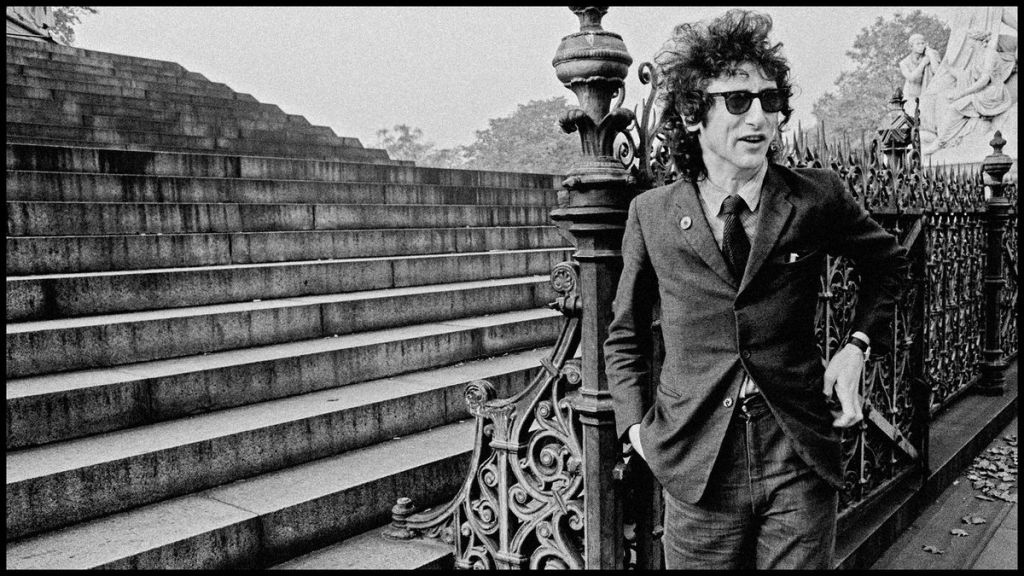
Cooper Clarke gives us a beautifully surrealistic way to comprehend the climate emergency in the sense of scattered particles of “poison sperm”. But a poet like Michael Symmons Roberts would be a counter-example of a slightly posher, less salvific “Manchester poet”. While Cooper Clarke captures the immediate bleakness of our moment, Symmons Roberts is able to create a slightly more panoramic view of our Northern soil, our Northern selves. In “You are free to go” in his 2021 collection, Ransom, Symmons Roberts offers us a bleak vision of our contemporary peregrinations, experimenting with according sacredness to the industrial earth upon which we tread:
Or those who walk to wire-hedged cliffs,
backpacks chiming with old coins,
who trust the birds’ instinctual paths,
and fly with seagulls, petrels, terns.
Now our mind-map runs
to pastel. Too many nights out soaked
in ditches, doorways, or hunched
in taprooms rehearsing plans and hopes.
Meanwhile, in Symmons Roberts’ Mancunia (2017), “Barefoot in Mancunia” traces a figure searching for the town’s centre of gravity:
So proud is he of his unofficial duty
that he cuts, stitches, dyes
a uniform befitting the role
of postman-to-the-places-noone-else-will-go
And Symmons Roberts is concerned with Manchester as a tapestry of liturgy, of prayers through gritted teeth; we glimpse this in “Mancunian Miserere”, where the disembodied speaker’s body is akin to the suffocated geography of Manchester. “Prise” and “praise” are antonyms and near homophones, which Symmons Roberts plays on, evoking the violence of worship:
and flood instead the cambers, ventricles, capillaries of me,
prise my teeth apart O God that I might learn to praise.
Symmons Roberts helps us to conceive alternatively of what Manchester poetry might be in the twenty-first century; perhaps something less personality-driven and more concerned with the raw materials of a strange, post-industrial city. John Cooper Clarke’s towering example of punk poetry should certainly not be written out, but I just want to posit that other Manchester poets might be getting us closer to the kind of tuning out that our contemporary ecological condition predicates.
This move away from a cult of personality might even create room for outsiders to offer a kind of Manchester eco-poetry. Perhaps this kind of eco-poetry would be blokish and familial while naturally-curious in the same measure, and perhaps we would give the reins to those who know the city well but are not “locals”. We might turn to Jason Allen-Paisant’s “Listen”, a poem in Allen-Paisant’s 2021 collection Thinking With Trees. Allen-Paisant is from Manchester, Jamaica, but now lives in Leeds and teaches at the University of Manchester. In “Listen”, Allen-Paisant is perceiving our own Northern English climes better than we can:
to the voice of the woods the chlorophyll
moving in the store box of the cedars
listen to the snakes of branches the weight
of water glistening on barks of birches
close eyelids and see dancing light
and shadow of dancing see footsteps
sliding over the litterfall a leaf
has scraped another
Or will Manchester allow Carol Ann Duffy to be a “Manchester poet”, given her long-standing connection with the North-West? In “Haworth”, Ann Duffy engages with the sinews and cobbles of the North-West. The moors are the mythological lore of Manchester:
I lie on my back. Two juggling butterflies are your smile.
The heathery breath of the moor’s simply your smell.
Your name sounds on the coded voice of the bell.
Cooper Clarke has created a stern mythology of a “Manchester poet”. But perhaps it is now time for us to reconsider how we might, ourselves, be Manchester poets, rather than following an act that cannot be followed.
Mary Wollstonecraft and ecology
Wollstonecraft’s Original Stories from Real Life (1788) is a brutal insight into the reality of life in the eighteenth-century, designed as a whiplash of unmanicured reality for children of that era. The framing device is of children sitting around and gently listening to stories. But these stories are not happily-ever-after fantasies; they are stony lessons of the reality of deprivation. These stony lessons of the death of children and animals, inducing children to be moral and devotional, are accompanied by plates by William Blake; indeed, the whole of Songs of Innocence and Experience was published in 1794, doubtlessly influenced by the unvarnished reality that Wollstonecraft evokes, while William Wordsworth and Samuel Taylor Coleridge’s Lyrical Ballads was initially published in 1798.
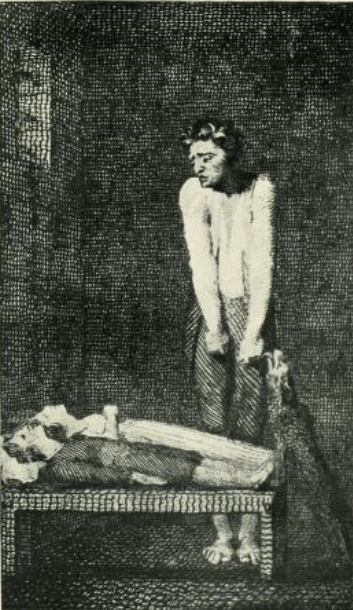
The idea of imagining late-eighteenth century children actually accessing these stories is to follow their radicalisation, tracing a childish joy in nature spun into an awareness of the horrors of rural poverty. The stories evolve gesturally from real locations; care-givers point out locations, and places, and begin to tell anecdotes about them. One example is Chapter Three; the children “bound over the short grass of the common”, until their eyes rest on the “broken side of the mountain”. Here Mrs. Mason, the apparently slightly sadistic educator, tells the story of “Crazy Robin”. Robin starts his life on good terms; he marries an unnamed woman, has a large family, and borrows a “trifle”. Everything’s going well for Robin, but ten or twelve years later, he is reduced to bizarre patterns, piling stones by the side of a brook, with the accompaniment only of a “cur dog”. In quick motions, Robin’s luck has turned suddenly; all of his children are dead, and he has been thrown into a debtor’s prison, a “gaol”, while his wife was “lying-in of her last child”. While Robin’s wife is deliberately unnamed, the way in which childbirth scars her body is woven into the story. With Robin in gaol, Robin’s wife tries to support her children through manual labour, but catches a cold, which turns into a “putrid fever”, and two of the children die, bringing with them a “cur dog”. Two children, Jacky and Nancy, remain, (two children, who, unlike Robin’s wife, are given the luxury of names), and follow their father to an unnamed prison. In a grotesque touch of hyper-realism, the two children then catch “jail fever”, usually now believed to be typhus, which was common in overcrowded, unsanitary English prisons, and die. Robin looks upon the corpses of Jacky and Nancy in “speechless anguish”.
We then cut to Mrs. Mason finding Robin dying, with only this cur dog for company, and therefore plunge back into where this anecdote is actually being told. Robin is dying, and Mrs. Mason nurses him as he dies. Robin has become one with the “cur dog”, living on “haws and blackberries”, and every kind of “trash”. This sense of botanical detail is important, and indicates Wollstonecraft has really got out; Robin lives off “nosegays of wild thyme”. This compounds our knowledge of Robin’s suffering when we learn that Robin’s dog tries to run after the horse of a “young gentleman”. In an act of class-based violence, emotionlessly treating this beloved cur as nothing more than an intruder, this “young gentleman” “levelled his gun at [the dog’s] head — shot him — and instantly rode off”. Mrs. Mason tries to find Robin again, and he is beholding his dead dog; then “nature was exhausted — and he expired”.
But the relentless cruelty of this chapter, really wanting us to see, hear, and feel the social conditions of the time, advances with the savageness of the framing device. In a touch that mirrors Geoffrey Chaucer’s The Canterbury Tales, Mrs. Mason then competes to tell the child, “Mary”, who exclaims “poor Robin!”, an even more horrendous story, to inspire her with emotive reason and coax her to think about the interdependence of human and animal. Again, Wollstonecraft here plays with the conventions of naming. Mrs. Mason now tells a story to the broody children of a figure who was hauled into the Bastille. As this is an instructional manual for children, Mrs. Mason has to explain that this famously brutal jail was indeed a jail, just like the one Crazy Robin was hauled into. In the Bastille, the unnamed figure, who does not nearly have the same colour as Robin, domesticated a spider within the solitary confinement of his prison cell over the course of “two or three years”. But rather than a heart-warming Steve Coogan film, the keeper crushes the spider, and the prisoner is left in a prison cell completely abstracted from the broader ecosystem. There is only his own non-monastic isolation; “that he breathed where nothing else drew breath”.
What this made dazzlingly clear to me is the extent of Wollstonecraft’s ecological thought. The greatest freedom for human beings is the ability to cultivate companionship with their fellow-creatures. This ecological thought forms the bedrock of A Vindication of The Rights of Women (1792), Wollstonecraft’s famous work, usually considered a proto-feminist text. Here, Wollstonecraft recycles this image of a figure in solitary confinement in lambasting the solitary confinement in which eighteenth-century women are kept. Her point is that women are held in unnatural, anti-ecological subservience; “To preserve personal beauty, woman’s glory! the limbs and faculties are cramped with worse than Chinese bands, and the sedentary life which they are condemned to live, whilst boys frolic in the open air, weakens the muscles and relaxes the nerves.” Wollstonecraft’s Original Stories was the launchpad both for this image and for Blake’s “mind-forged manacles”; we can only think of the barefoot, Dantescan Robin, lamenting his unnamed wife.
In turn, however, Wollstonecraft’s image of the spider in the prison cell is drawn from William Cowper. (I myself experienced something similar once; I was in St. Hugh’s Charterhouse and a bat came into my cell, thought I never tamed it). In Wollstonecraft’s The Female Reader: Or Miscellanous Pieces in Prose and Verse (1789), Wollstonecraft’s ecological sensibilities are further on display. In her introduction, Wollstonecraft celebrates particularity, bemoaning those who, “trace the great outline of nature, but neglect the colouring which gives warmth and beauty to the piece”. She invokes a pastoral image of Heaven, calling it an “awful close”. The Female Reader is an anthology, featuring a section called “Descriptive Pieces”. These “Descriptive Pieces” are radical, both literally and politically. One of these pieces is William Cowper’s “Tenderness for Animals”, contrasting the psalmodic “bounding fawn that darts across the glade” with “cruel man”, and the “savage din of the swift pack”. It seems plain here Cowper is criticising the cruel blood sports of the late-eighteenth century; Cowper criticises “detested sport / that owes its pleasure to another’s pain; / That feeds upon the sobs and dying shrieks / Of harmless nature”. For Cowper, he who hunts “disturbs th’Economy of Nature’s realm”, in an image that seems strikingly ecological and modern. But it is from Cowper’s “Bastille” that Wollstonecraft borrows in The Original Stories. Cowper uses a similarly Biblically-laden image of a prisoner who tames a spider to relieve the dull monotony of his chains:
To turn purveyor to an overgorg’d
And bloated spider, till the pamper’d pest
Is made familiar, watches his approach,
Comes at his call, and serves him for a friend
The improbability of this kinship is turned into an excoriation of the way men subjugate each other, giving them no companions but a spider. Cowper’s speaker protests:
That man should thus encroach on fellow man,
Abridge him of his just and native righis,
Eradicate him, tear him from his hold.
It was from Cowper that Wollstonecraft refined and reworked the industrial image of shackles and fetters that we now instinctively recognise and respond to. We might think of the way, in one of John Clare’s later poems entitled “The Skylark” within the Knight Transcripts, Clare shares his cell with a hallucinatory skylark, whom he addresses: “Although I am in prison / Thy song is uprisen / And singing away to the cloud”. The forthcoming The Complete Works of Mary Wollstonecraft will open up Wollstonecraft’s hybridistic thought and her contributions to both devotion and ecology, pointing out the debt that the canonical Romantic poets of the late eighteenth and early nineteenth century owe to her novelistic prose.
(My book, John Clare’s Modern Eco-Poetic Legacy in English, is out on 26th October, 2026): https://www.routledge.com/John-Clares-Modern-Eco-Poetic-Legacy-in-English/Hickford/p/book/9781041209126.)
“John Clare’s Modern Eco-Poetic Legacy in English” by Sam Hickford
I am pleased to say I am publishing a gigantic research monograph, John Clare’s Modern Eco-Poetic Legacy in English, with Routledge, on October 26, 2026. It will feature original discussions of established, canonical luminaries like Seamus Heaney, Michael Longley, and John Burnside alongside recent innovators like Brenda Hillman, Elizabeth-Jane Burnett, and Maggie O’Sullivan. The theme will be who John Clare is for us now, discussing one of the few shamanic voices who can point out the snipe within the landfill site. It contains dissective studies of contemporary poets, combined with new, manuscript poems by Clare.
The book is available to pre-order on October 5.
“Remaining Philosophical” by Jack Smithies
The power’s out. The antidote the books
alluded to proved ineffective, and
the animals ate each other or themselves
until by last night none were left.
The red sun sets upon the blackened heath –
night after night my dreams trouble me more
with deathly bestiaries, processions of
babbling lunatics and manticores.
What tools we could have used to shift the course
lie broken, rusting in desuetude.
The garden now long fallow, children visit no more.
We laugh, we are to blame, but only we,
who hold the secret, know we will survive,
remain quite philosophical about it all.
“Even if” by Ridhima
हम अगर बैठ भी जाए असीम समुन्दर के हर कोने पर
अगर कह भी दू में तुमसे हर बात
और सुनते रहो तुम
जैसे शब्द कह सकते है और
वक़्त कोई चीज़ ही नहीं
भरती रहु खाली है जो उसे
बिना रुके कभी थकू ही नहीं
हम अगर छु भी ले एक दुसरे को
हर उस ढंग में जैसे जिस्म का ख्याल है
तुम्हारी आंखों में पूरी तरह से समां भी जाओ में या
तुम अपना कोमल सुनहरा सर मेरी गोदी में रख कर बेफिक्र आराम करो
कहने का मतलब तुम मेरे करीब हो और
नशे के प्याले में पूरा चाँद मिला है
आसमान ठहर गया है हमारे लिए
जख्मों के निशाँ तक मिटने लगे है
ऐसा हो भी तो क्या बात हो मगर
ऐसा होता ही नहीं
Free translation (by Ridhima):
(Even if we sit on every possible corner of the limitless sea,
Even if I say everything to you and you keep listening
As if words can tell, or there is not a thing as time
Filling that which is empty, again and again without fatigue
Even if, we touch each other in every possible way the body desires
Even if your eyes are able to behold me completely,
you keep your soft golden head on my lap resting carelessly
What I meant to say is,
You are close to me, and the nectar of intoxicated moon is blending in the cups we drink
Sky is slowing down for us , and the marks of wounds are fading away
Even if, so happens how good it shall be.

