Squidiography – Bullshit Jobs – Part 2

https://s.abcnews.com/images/GMA/200329_gma_ault2_hpMain_16x9_992.jpg

Graeber responds to the relationship between the COVID-19 pandemic and his tantalising notion of a “bullshit job”. His article in politico.eu suggests the tangible ways in which we have seen the visceral and stunning veracity of his analysis. To cut it short, the self-isolating media has presented us dogmatically with so many scenes of real people, really working, “local heroes” (in what is essentially propaganda speak), leaving their house and actually carrying out genuine tasks in the real world. Many of these have been traditional heroes, that society loves to celebrate and somehow fails to pay a decent wage (and, actually, increasingly even fails to provide with temporary work.) Doctors, nurses, teachers, paramedics. Then there have been the people who society totally depends on, but whose jobs have always been dismissed, or seen as stop-gaps in other projects. Supermarket workers, farmers, cleaners, etc. These were the only people who were ever doing any tangible work all along, even before the pandemic. Everyone else had jobs that existed in complicated legal and political networks. They were largely placeholders, and their jobs were often to self-consciously participate in the masquerade of the “economy”. In other words, they looked busy and preened, but it was an open secret that they were never doing anything at all. If they were doing a single thing, it was largely looking important, participating in needlessly complicated chains of delegation, and using bizarre and meaningless management word-salad in order to justify their frail existences. For Graeber, Coronavirus has illuminated this obvious reality, this open secret.

The reality of this analysis is testified to the endless scenes that are regurgitated in the media. Endlessly, we are presented with the sheer novelty of scenes of people “working” – actually doing stuff in the physical world. These scenes, in of themselves, are part of the Bullshit Job Economy. They are foisted upon us by a media that, in turn, is comfortably self-isolating, and many of the media personnel who reproduce and discuss “real work” are better off than the foolish and plague-catching “real workers” they depict. Similarly, politicians – who have been unable to physically debate issues and to look important in public – celebrate and debate “real work” and “real workers” from the comfort of their own living rooms. All of this reinforces the contradictions of the modern economy. It shows a managerial, professional and political class increasingly divorced from the reality of anyone who does “real work”. They are literally physically distanced from the organisations they manage and govern. They cannot access them since they have no genuine reason to be there.

Zoom has become a bete noire in this wonderful contradiction. I remember working as a care worker in the latter half of 2019, and observing the strange new role that Zoom had begun to undertake. Meetings used to be a roll call of people who were at least visibly there, and seemed to be doing something, even if it was just being present in an office. Now, meetings are exposed as what they are. They are self-perpetuating meetings. Many of the people who schedule and convene Zoom meetings are those comfortably self-isolating and who have high salaries. In the meantime, the actual workforce – the “essential workers” who have been doing the actual work during Coronavirus – have been subjected to these meetings, many of which have had no tangible relationship to the workplaces they inhabit. The result is really odd disassociation between management and what have often been termed “key workers”. Those who have had bullshit jobs have been given clearly better deals (or what have been perceived to be better deals) than being forced into the world to catch and transmit Coronavirus for less money and a temporary job.

In the mean time, Universal Basic Income – which is one of Graeber’s tentative policy recommendations – has been increasingly part of UK political debate. It has made so much more sense. Actually, as a care worker, I felt extremely sorry for the middle management. Coronavirus had deprived them of the opportunity of having meaningful jobs. In the past, their one solace was that they got to interact with the people the organisation cares for, and that made working in an administrative or managerial capacity worthwhile. Now, I felt increasingly like they were confined to, or imprisoned in, Bullshit Jobs, and there wasn’t much they could actually do about it. They were locked into a kind of existential struggle, in which nobody was looking over their shoulder and yet they had to fight to justify their existence, to themselves.

Consider if so many of the people who had actually deserved the privilege and desire of doing nothing had been able to do so. Consider if the world had a functioning and consistent welfare system, in line with the reality of the post-industrial economy. Perhaps the Coronavirus pandemic has allowed us to resist utopianism and confront the contradictions of the economy we live in.

Do not, under any circumstances, ‘clap for carers’

Carers have extremely difficult and demanding jobs, it is true, and we all need to “pull together” and “support each other” in these times. However, it is a shame to say that the true problems that carers are faced with right now cannot be clapped out of existence, they are simple institutional problems that could be remedied by effective action by politicians, who invest far too much time in supporting “clapping for carers” and insufficient time actually doing anything to make carers’ lives slightly bearable at the moment.

I worked as a carer for half a year in London during this pandemic. The rotas frequently and unavoidably consist of carrying out a dizzying battery of split shifts, sleep-overs, and ten or twelve-hour long shifts. Some days consist of starting work at 7.30 AM and finishing work at 9 PM, with a little window in the middle in which you are “off” but not in any meaningful sense. The effect is a basically permanent lethargy. (This was a very generous employer.)

Strange and convoluted hours are an unavoidable reality of caring for people. However, this is combined with the traditionally bad wages for carers, who earn far, far less than people sat at home self-isolating and working 9-5 from the comfort of their own homes. This is in spite of the many different phenomena they have to worry about in this pandemic. They could pass COVID-19 to vulnerable people, killing them. They could themselves easily become infected with COVID-19, especially in bigger care homes. In addition, and perhaps hardest of all, they must try to explain and elaborate the COVID-19 pandemic to the people they care for (“support”, in contemporary parlance.) They must explain why they can’t go out and see their families. They must explain why nobody was able to visit them on Christmas. They must explain why they can only see their friends and loved ones on a Zoom call. It is extremely difficult to explain to someone who is highly progressed in dementia suffering

Instead of ‘clapping for carers’, then, I urge you to demand higher wages for carers. I also urge you to encourage anyone working as a carer right now to join a union. Union penetration in the “care sector” is extremely low, and carers can join UNISON, who are determined to fight for their interests. I urge you to fight for a systematic end to zero-hours contracts, which many care workers must still contend with. I urge you to ask the government to fund the NHS properly, which is, by definition, the government’s job. This could be done, for example, by not spending quite so much on, for example, the military, since we very famously can’t nuke COVID out of existence. (I believe military spending increased in the last budget, the government evidently determined that shooting the virus with an AK-47 is the best course of action.) What carers need right now is not a patronising pat on the back, a sort of impersonal “well done”, but structural changes that make their lives easier. I have never felt encouraged by people ‘clapping for carers’, but I know I would be encouraged by such structural changes.

COVID-19, social care, systematic destruction of the environment

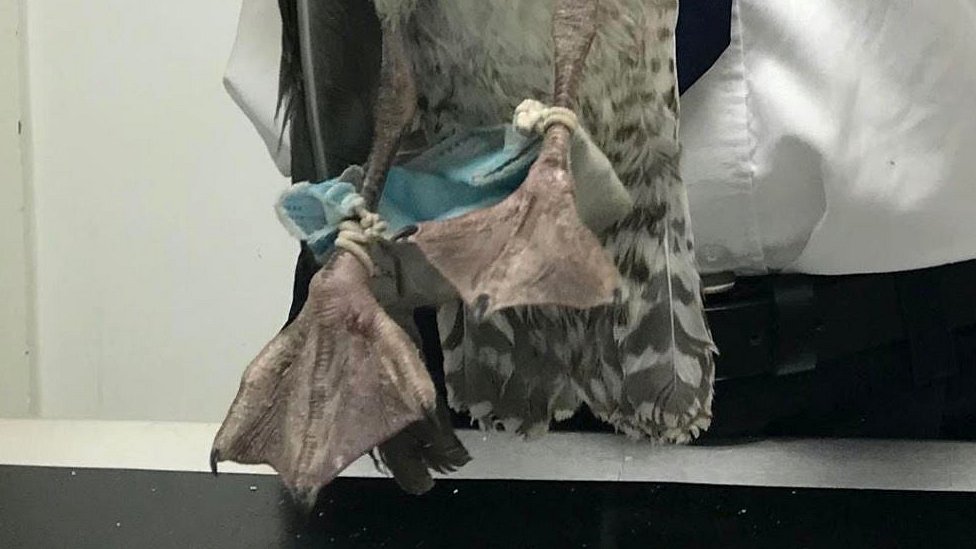
I worked for approximately half of this year as a Support Worker for people with learning difficulties, in two Assisted Living facilities in London. One of the most depressing dimensions of this for me has been the endless volume of plastic waste, spurred ceaselessly by the COVID-19 pandemic, and the way in which any focus on (or discussion about) the climate emergency has been sidelined by the pandemic. The law has promulgated that we use disposable masks endlessly, changing them several times per day in the course of our shift in order to “protect ourselves” and the people we care for. In reality, this is a totally warped and human-driven notion of “care”, since it causes relentless damage to the ecosystem and kills non-human life. It is not difficult to find pictures of sea-birds trapped in the plastic trinkets we use to protect ourselves. It is “anti-social” care, as opposed to “social care”, because it involves an anti-care for the ecosystem in which we originate and emerge from, and makes all of our activities possible.

The COVID-19 pandemic is inextricably linked to climate change: the two are inseparable. Much of the world population lives in heavily-polluted environments. If urban centers become less polluted, this will reduce complications from global pandemics. Health and social care – which is usually mysteriously off the hook – accounts for 39% of public sector carbon dioxide emissions. Thus, it has been a tragic year for the environment. It has been tragic for policy-makers, for the government, and for regulators, to so radically sideline the climate as to make it a non-issue. The COVID-19 pandemic should have alerted those who arrange the choreography of our social and health care systems to the essential truth that these systems depend on the health of the global ecosystem. In reality, all they have done is cauterised the COVID-19 wound with a gigantic toxic plastic plaster.

Companies are rushing to create biodegradable PPE products, and most medical supplies providers offer at least gloves designed to biodegrade in landfill. Yet I have seen and heard nothing about the urgency for, at the very least, adopting these products in the face of the climate emergency. 2021 should be the year in which the health and social care sector – enabled by government regulation – confronts its environmental responsibilities.

All the Pokémon are dead

stanler
Stantler

In Pokémon Ruby and Sapphire, we are told of Stantler, one of the Gold and Silver Pocket Monsters, “Stantler’s magnificent antlers were traded at high prices as works of art. As a result, this Pokémon was hunted close to extinction by those who were after the priceless antlers.” Stantler’s other PokéDex entries allude to how precious its various parts are, as a commodity. (The Pokémon universe somehow makes a distinction between catching a Pokémon, and hunting it.) “The round balls found on the fallen antlers can be ground into a powder that aids in sleeping.”

Stantler’s appearance – with its large antlers and its cloven hooves – clearly allude to the caribou. The caribou has been hunted by indigenous people for generations, but its antlers are used in larger-scale hunting operations as an aphrodisiac in international illicit markets. One species of caribou – the Queen Charlotte islands caribou – was declared extinct in 1908, after decades of over-hunting, and the caribou’s IUCN status is “vulnerable”. The boreal woodland climates that the caribou formerly inhabited are changing unrecognisably, and the Siberian tundra reindeer is in terminal decline.

The latest Pokémon games, Sword and Shield, overtly address the reality of climate change. The most obvious example is the bleached coral Pokémon, Cursola. For anyone who remembers fishing Corsola in Gold and Silver (it seems to me almost like an idyllic childhood memory, since I grew up in a post-industrial urban Northern English town), the sudden appearance of Cursola – A Ghost-type Pokémon which inhabits the spots where the coral Pokémon (corsola) once was – is eerie. It brings the Pokémon universe in line with the fact that, everywhere, coral is dying. Then, of course, there is a new form of Weezing, that looks like a smoke stack. Yet these are only the least subtle ways in which the new Pokémon games comment upon our evisceration of the natural world. For the first time, the National Dex has not been included. Stantler – like many other Pokémon introduced in previous generations – has been completely erased from existence.

cursola corsola
Corsola, on the left, and Cursola, on the right, the new and snazzy bleached coral Pokémon.

This has perceived as being an effort to simplify the games, yet surely it has a similar significance to the sudden creation of “climate change Pokémon”.If the existentialist-looking Cursola now exists, instead of the beaming Corsola, then it’s perfectly possible that some of the other Pokémon have simply died off. If Stantler’s PokéDex entry warned that it may well die off, it is readily possible that it has actually died. In other words, the Pokémon universe, which has been alluding to the endless biodiversity of our planet in its constant expansion, is now displaying to us the reality of the global ecosystem. The Pokémon creators can no longer increase endlessly the amount of Pokémon, if there is to be one twinge of realism about the games. In the non-video game universe, which Pokémon draws its inspiration from, new species are evolving at a much slower rate than that they are being permanently wiped from existence. Animal extinctions simply occur: we’re not warned about them. They happen in exactly the types of fragile landscapes that we have fled from, or bulldoze. They happen largely as an insignificant backdrop to human-centred news. It is a tragedy when a large volume of human beings die, yet it is an equal – and, in many ways, greater – tragedy when a whole species goes extinct, one that we have no framework of reference to deal with.

trubbish
Trubbish

Stantler no longer exists, and look at the Pokémon that now do. It’s not just Galarian Weezing, and Cursola, it’s all of the other Pokémon that they decided not to kill off. Trubbish – a dark, green rubbish bag from Generation V, surely a throwaway Pokémon if there ever was one – has not been killed off. Who on earth has any attachment to Trubbish? As someone who played all the Pokémon games when I was younger, I couldn’t give two Hoothoots about a Pokémon based on a refuse sack, but I actually remember being a bit excited when a wild Stantler would appear in Gold. But that’s the point; climate change is going to leave us with only slathers of Poison- and Ghost- type Pokémon.

There are so many more examples of this, but one of my favourites is Galarian Slowbro. There is a new form of Slowbro, which is Poison-type, and its PokéDex entry tells us, “If this Pokémon squeezes the tongue of the Shellder biting it, the Shellder will launch a toxic liquid from the tip of its shell.” The poisonous oceans are infecting the Pokémon we remember. Many of the other Pokémon, which were based on exotic, rare, threatened animals, are also omitted. Girafarig, a giraffe Pokémon, Donphan, an elephant Pokémon, Relicanth, a coelacanth (the West Indian coelacanth is critically endangered), and many others, are not included in the new games. Since so many of the real-life counterparts of these animals are critically endangered, it stands to reason that they are no longer present. The Pokémon that remain match more closely the mutated natural world which we actually inhabit. There is a Pokémon based on constellated lumps of coal (Rolycoly) and a Pokémon based on a gigantic skyscraper (Duraludon).

The fact that Pokémon can, and will, go extinct, is testified to in the fossilised Pokémon that one could resurrect from the initial games, like Aerodactyl. The new Pokémon games carry a savage warning. If we continue to destroy the natural world at an unprecedented rate, not only will we destroy the real world, but also the virtual world.

Roy Campbell

I’m trying to build a moral case for Roy Campbell being totally left out of courses on twentieth century poetry, but knowing nothing about South African politics, and whether or not he is a fascist, I’m struggling. I suppose the fact that his stuff seems much less nationalistic than Kipling’s, and much more about just nature and natural images, makes his total elimination quite striking. I’ve heard that, despite his weird politics, he was hugely anti-apartheid. But it’s not something I know a lot about.

Roy Campbell – The Olive Tree II
Curbed athlete hopeless of the palm,
If in the rising moon he hold,
Discobolos, a quoit of gold,
Caught in his gusty sweep of arm,
Or if he loom against the dawn,
The circle where he takes his run
To hurl the discus of the sun
Is by his own dark shadow drawn:
The strict arena of the game
Where endless effort is denied
More room for victory or pride
Than what he covers with his shame.

Review of Dorothy Day: Dissenting Voice of the American Century

dorothy dayDorothy Day: Dissenting Voice of the American Century, by John Loughery and Blythe Randolph. Published by Simon & Schuster.

Dorothy Day was disdainful of the inertia of the Catholic Church in the U.S.A. in the face of mounting inequality and increasingly mechanised and unethical warfare. Such disdain led to a very antique solution. A Medieval House of Hospitality in New York for the exponentially increasingly impoverished and homeless population, influenced by the vision of Peter Maurin, a French vagabond who chanced into Dorothy. This House of Hospitality (which originated from the paper, Catholic Worker) was of its time; it helped to alleviate the worst excesses of the Great Depression. It also helped to provide a refuge for conscientious objectors, who were still sent away for their refusal to draft during World War II. It was part of a sustained vision for a humane world, in opposition to warfare and the idea that a military government could be expected to reliably alleviate poverty, which also included farming communes.

This story is well-known, and telling it risks cliché, or consigning this difficult struggle to the annals of grisly twentieth century (American) history. We needed Houses of Hospitality then: now, especially in the U.K., we have a benefits system which ensures that nobody needs Dorothy Day’s fiery and urban brand of voluntary poverty. Yet so much of the latest biography of Dorothy Day – written by John Loughery and Blythe Randolph – places her squarely in the maelstrom of the twenty-first century; in conflicts which have simply not been resolved yet. Her endless struggles for racial equality are skilfully and presciently highlighted in the book; she persistently and forcefully asked why there so few black Catholic priests, and was part of a committee lambasting anti-Semitism before World War II. She had a fierce dispute even with some in her House of Hospitality in New York City – one of her fellow residents and community members called her a ‘nigger-lover’ because of her profound and pioneering generosity to the black community in New York. On the question of racial discrimination, she was at odds with so many around her, even Catholic writers, like Hilaire Belloc, who influenced the Catholic Worker so profoundly.

That Dorothy Day’s life matters now, and her struggles are unfinished (she was also an anti-nuclear campaigner, and nuclear warheads emphatically persist), is made alive by this timely and meticulous biography. Nor is Day’s struggle solely “American”. We learn, in countless ways, that Dorothy was a committed Anglophile, and that her ideas and dynamism were charged with interactions with English writers. W.H. Auden, of all people, rescued the New York Catholic Worker from financial ruin, and Dorothy corresponded with Aldous Huxley, sharing his fear of a modern society in which true humanity is sanitised away. The relationship is one of the many surprising relationships that the two biographers draw attention to, informing us that Huxley and Day were in “full agreement about prayer as an act of mortification”.

Thus, for those in the U.K. energised by Day’s message, this biography brings Day’s vision across the Atlantic and pinpoints its enduring relevance to the conflicts of today. This is aided by the extensive research of the biographers, which leaves no stone unturned in Dorothy’s early life. A harrowed incident in Dorothy Day’s Greenwich Village days recalls an Augustine-like moment in her journey towards faith, one that Day rightly avoids in her autobiography The Long Loneliness, in which she witnesses the heroin-induced death of one of her accomplices. However, while the biography beautifully relates the full intellectual and political history of Day’s life, I do find it difficult to reconstruct what daily life at the New York Catholic Worker must have actually been like. Namely, we don’t get a sense of how Dorothy Day’s day took shape, and how New York Catholic Worker – at its less intense moments – was lived. This is slightly frustrating to someone with such an enduring commitment to a Catholic Worker community in London. Yet perhaps we must seek this elsewhere, and embrace how deeply pertinent this biography makes Dorothy Day.

Squidiography – Bullshit Jobs (part 1, pre-corona)

https://media.boingboing.net/wp-content/uploads/2018/05/71VBlIsi5YL.jpgCompanion YouTube video: https://www.youtube.com/watch?v=MIvUZnAdXwk

A Spanish civil servant in Cadiz, Joaquin Garcia, was due to receive an award for his twenty years of ongoing service and commitment to the Municipal Water Board. Attempting to give him his well-deserved medal, however, it was suddenly perceived that his desk had been totally unoccupied for at least six years, despite receiving a salary. This incident was widely reported in the British media, and was perhaps used as a scapegoat for many key things in the UK’s Brexitty imaginations. It was also circulated in the market-dominated English speaking media, where it became a quaint story about something dark and sinister. That it is only in the idle and hyper-bureaucratic European Union, maybe, where this type of skiving tomfoolery would be tolerated and unrecognised for so long. That the Civil Service in many European countries is deeply inefficient, and this would never be tolerated in a utopian free market economy where lots of different types of water are sold to us by private contractors. He is a pantomime villain on a much more sinister website called HR Morning – where all the genuinely villainous HR professionals gather, like Macbeth’s witches – in which his work-shy attitude is scorned by these eldritch monsters from the deep. (For context, another article on the website is ‘5 times it’s ok to fire an employee on FMLA leave.) “He was – check this out – slated to receive an award for two decades of ‘loyal service’.” (https://www.hrmorning.com/now-this-is-what-youd-call-an-employee-engagement-problem/)

A man like Joaquin Garcia is indeed one of the greatest villains in a culture where work is not really a set of obviously productive and meaningful tasks any more – like digging holes, cutting furzes or escorting billionaires – it is a sacred duty, and pretty much the only sacred duty that is meaningfully universal. People who shirk this sacred duty are blights to be quashed by the Machine. Work might be boring or even obviously meaningless, particularly in the context of so-called white-collar jobs, but we must respect it as a sacred ritual that must still consume all the time that we have been assigned on this earth. Work is now usually conceived in terms of the hours it involves rather than the projects that it entails – the question I have always been asked at work in England is not “what are you planning to do today?” but “what time are you on ’til?” Work is a God to worship. When so many are looking for a cushy job, or have to claim unemployment benefits in which they are forced by the DWP to maintain an aggressive timetable of looking for work, a man like Joaquin – who apparently abuses the privilege he has been given and scorns his probably comfortable duties in the Civil Service – is unthinkable.

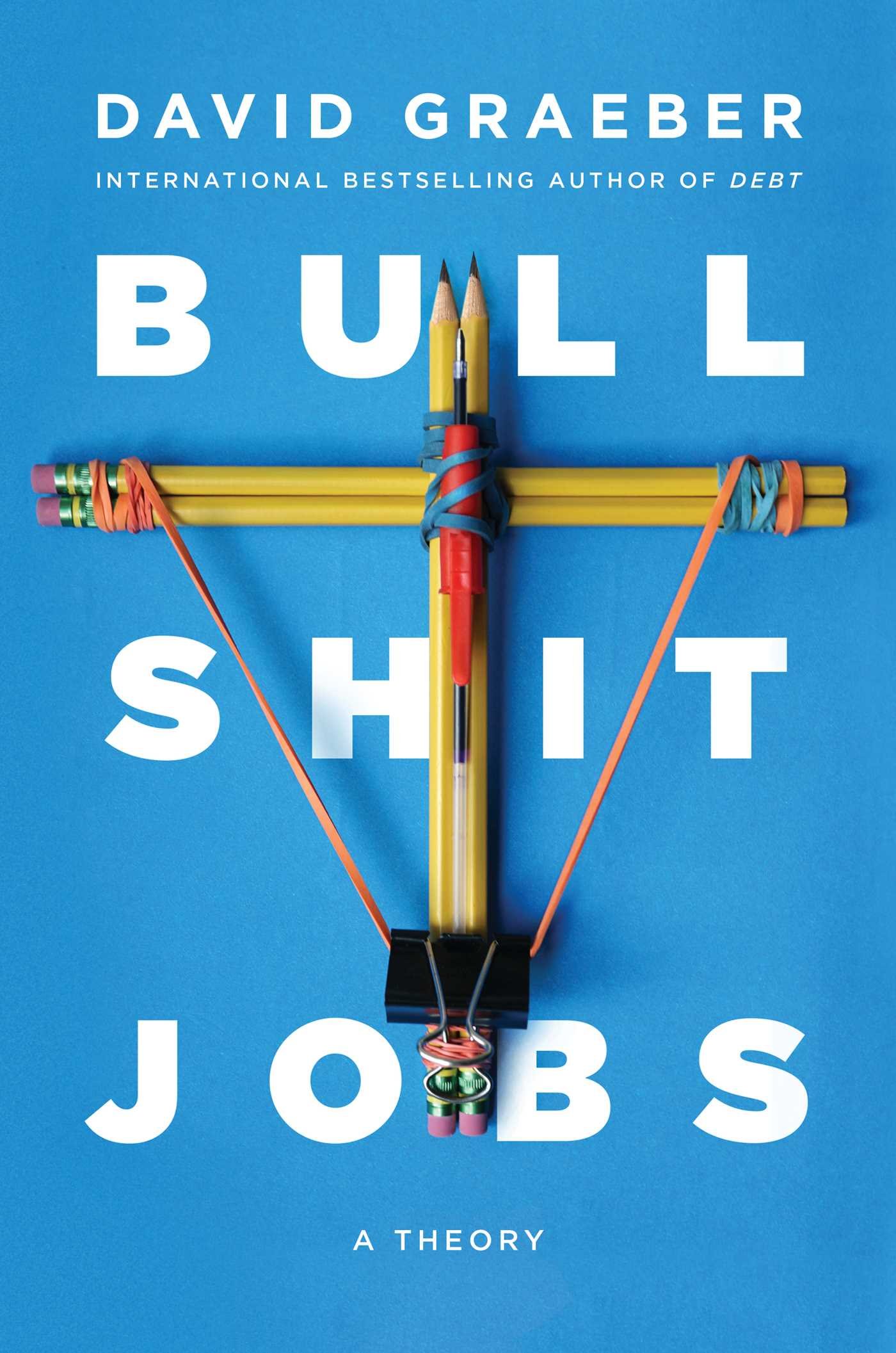
In ‘Bullshit Jobs’ by David Graeber, we find a totally different take on this issue. Graeber points out that the case of Garcia is extremely common in the modern work-place: only that he went to different measures to most, but measures that were totally reasonable. Garcia was extremely good at his job, and when he started working for the Municipal Water Board he was an extremely effective and prolific civil servant. However, the people who supervised him were suspicious of his far-left politics – which, of course, had no bearing whatsoever on his work at the Municipal Water Board. For this and perhaps other reasons, they stopped delegating him any duties at all, despite his desire for duties and the fact that he specifically requested them on a number of occasions. Thus, he was forced into a situation that will be very familiar to a lot of ‘workers’. He had to sit at a desk all day, doing nothing but pretending to be busy, while people looked over his shoulder and expected him to inexplicably be doing things of importance. He might as well have read books or spent all that time planting a permaculture garden, but he was forced into a kind of active inertia which, in itself, is psychological turmoil. Perhaps as if Sisyphus was staring at the boulder, pretending to push it, as ancient Greek mythological bureaucrats stared for eternity. Instead of endure this obvious indignity, which he repeatedly protested, he decided to stop coming into work and spend his time working – for example, reading philosophy.

Graeber uses a large amount of qualitative and quantitative data to prove a very basic thesis: that many people have utterly pointless jobs, which he eloquently terms ‘bullshit jobs’. Detailing the example of a young man who works as the subcontractor of a subcontractor of a subcontractor for the German military, Graeber gives the following account of what a so-called ‘Bullshit Job’ entails:

This I consider the defining feature of a bullshit job: one so completely pointless that even the person who has to perform it every day cannot convince himself there’s a good reason for him to be doing it. He might not be able to admit this to his coworkers—often there are very good reasons not to do so. But he is convinced the job is pointless nonetheless.

He spoke to people all over the world who claim to have totally pointless jobs that many of them had left due to the eventual realisation that they were utter bullshit. He spoke to people who claimed their job was to answer e-mails and receive telephone calls but that most days they did not have any to answer. He spoke to people who mentioned having to carry out totally pointless tasks that they knew they could write programs to carry out, but stay because it is the only way they can identify of having a respectable enough salary to buy things. He cited examples of people who work in a needlessly complicated chain that could be effortlessly simplified. For example, the kind of people discussed above who work for a contractor of a contractor of a contractor – and that none of these contractors have any reason to exist, they are merely self-perpetuating entities that create imaginary work out of thin air.

This is not just in the public sector. In fact, in the private sector, there is still a huge demand for individuals to sit around and do nothing, and it is ridiculous to deny this essential reality. He classifies different types of ‘bullshit jobs’, what they entail and the reasons they have for existing. Flunkies, for example, make their pay-masters look more powerful: they occupy desks to make an organisation look more threatening or serious by the amount of desks it has occupied. This happens a great deal, for example, in investment banks, where Graeber points out that a huge amount of the work supposedly carried out could be easily automated. He cites the assessment of a programmer employed to carry out the review of one particular bank, who estimated that 80% of a private bank’s 60,000 staff have jobs that could have been automated. This is a huge number of people – what are they all doing? Why do they all go to work, day in and day out? Before you suggest that they must all do something that is of direct benefit to society, bear in mind that there have been times when people have stopped banking en masse and things have been largely fine. As early as 1970, bankers in Ireland went on a six-month strike, and there was very little overall effect on the Irish economy. To put this into context, Graeber’s book includes an analysis of the net worth of certain professions as carried out by a 2017 study by several US economists. It was somehow discerned that for every precise $1 that bankers are given, they are decreasing $1.50 worth from the overall welfare of society.

Do they all realise they have completely pointless jobs? Keynes predicted mass technological unemployment in the 1930s as economies move to the point of being able to automate tasks at an unprecedented rate, and he predicted it soon. Technological unemployment, of course, is when all productive processes become so mechanised that the work-force decreases dramatically. As Graeber notes, we have been experiencing a kind of mass unemployment for nearly a century. We hear constant predictions about how robots will nab 47% of jobs by 2050 and what have you, and yet Graeber argues that we have reached the pinnacle of automation already:

Automation did, in fact, lead to mass unemployment. We have simply stopped the gap by adding dummy jobs that are effectively made up.

It is the professional and managerial sector – rather than any other sector like retail and manufacturing – that has seen such an explosion of jobs in the Western world, and in which jobs have proliferated. It is unfair to say that many managers and finance workers don’t work – yet it is sure that many spend only half an hour or an hour a day on their actual duties. Graeber points out that we could very easily institute a three-day working week with absolutely zero effect on our dear and worshipful ‘economy’. Yet something has made the idea of ‘work’ last well past its sell-by date, and it is not our lust for respectable salaries. Graeber discusses how work emerged as a quasi-religious ideal in Western Europe.

Work—and specifically, paid labor under the eye of a master—had traditionally been the means by which such adolescents learned how to be proper, disciplined, self-contained adults.

In other words, the need for a ‘work ethic’ and a related ‘working week’ was an ingenious way in which everyone, including the middle class, were kept out of trouble. The aristocracy, of course, were free to hunt, write sonnets and engage in indulge demented sexual fantasies before their inevitable religious conversions. This is especially the case in the UK, where, particularly in the nineteenth century, the working week became more brutal and religion began to decline. Work became the only way in which people reliably interacted with each other after compulsory church attendance declined. Remember that Church’s function was not just the consumption of the body of the Anointed One but it was also the way in which people met each other, checked up on each other and gossiped about each other. Before the nineteenth century, people largely did not go to ‘workplaces’ – they worked from home as farmers or slaved over their particular craft. A huge majority of the population worked in agriculture, which does not involve the ritual of a frenetic commute on the Tube with a gingerbread latté. About a quarter of people in the UK worked in agriculture in 1801, according to data collected in An Industrial History of Modern Britain. Now, the World Bank estimates that about 1% of people in the UK work in agriculture.

I think it’s easy to speculate on what happened, and I think this is something Graeber only touches on, but it leads to an interpretation of my own. In the UK and much of the industrialised world, after the Industrial Revolution, work became the religion of society – the way in which you could make friends, formed social networks as well as the structure and discipline which kept one living an ordered life. In the UK, we do not have instituted religious holidays or carnivals – they began to peter out in the nineteenth century with the Industrial Revolution’s increasing demands on the populace. Rather than religious affiliation – there were Catholic villages and Quaker villages – a particular textile mill or factory became the religious glue (religio – I bind) which held a town together and gave it the permanence and ritual spaces to encourage people to actually talk to each other. It is a well-known fact that people will seldom talk to each other in a consistent way unless they are coerced. After rapid industrialisation and automation, there became less and less for anybody to do but still predominantly industrial institutions.

Work was such a religious and sacred duty – the creation of jobs became akin to the saving of souls, and the Conservative Party or Labour Party of whatever country you live in now tout how they will create jobs as their sacred mantra. Despite the fact that there is not enough to do any more, work is our religion, and perhaps a more difficult religion to wean ourselves off than Graeber realises. Without work, we have no reason for communion, no identity, no structure or discipline to our days, despite the fact that we don’t necessarily do anything there. I remember talking to a friend, a veritable anarchist, somebody who enjoys tinkering around with electronics and has a healthy disbelief in the credibility of the institutions of society. He said he was looking forward to work because he was incapable of managing his own time and he wanted somebody else to dictate that he had to be somewhere and do something.

Thus, despite widespread feelings of boredom, lassitude and alienation, we still feel some psychological need for ‘work’ as an ordering principle for our lives, separated of course from the more old-fashioned notion of doing useful things with our time. This is perhaps the chief limitation of Graeber’s analysis: it is going to be a big existential struggle to convince humanity of the folly of ‘work’. The policy that Graeber most suggests is a universal basic income, in which everyone is paid a basic amount of money without any obligation to find one of the entirely infernal bullshit jobs that are lamented by Graeber. This policy would rectify a situation in which one of the most meaningful things you can do is stay at home, yet first we need to rediscover ways to hold society together that aren’t going to ‘work’ every day. There could also be systematic support for those who choose to research, conduct artistic projects or study obstetric gymnaesology from home in a future economy in which work is at least no longer a permanent imperative.

Bullshit Jobs, David Graeber. Rating: Axon

(Much of the incidental symbolism for this blog-post was suggested by Amadeus Harte and Jack Smithies)

Squidditura – Ghulam Ahmad

About two weeks ago, in the pre-Coronavirus era, a very quiet and Stoic gentleman in Manchester hands me a leaflet proclaiming the new Messiah, Mirza Ghulam Ahmad. He seems too polite and graceful to be mad. I learn that Mirza Ghulam Ahmad was a nineteenth century Indian man who claimed to be an awaited prophet within Islam. Not only does he seem rather meek, but this particular Messiah claimant himself also seems rather nice. He proclaimed an Islam of absolute peace and protested against those who had used it for the ideals of warfare. He also genuinely believed in fostering understanding between different religious groups – particularly, dialogue between Hindus and Muslim. This was in the nineteenth century, which was the beginning of the sorts of strict religious identities that we see today. In his last book, A Message of Peace, he proclaims, “We are mutual neighbours. This requires that we become friends to each other, with purity of heart and sincerity of intentions.” Not only this, he was adept at recognising sins beyond the canon of sins that are usually recognised by the zealous clerics of different religious traditions.

In fact, as I read A Message Of Peace, I am struck by how coherent and rational it all sounds. Ghulam Ahmad offers a liberal and universalistic interpretation of the Qu’ran (of which I know nothing.) He states that the Qu’ran opens with the surah al-Fatihah, which protested against those who try to “monopolise” God’s love for themselves. Ghulam Ahmad’s essence and conception of himself as the Messiah is that the other Messiahs were insufficiently universalistic. “As it is also written in the Gospels that Jesus Christ (peace be upon him) observed that he had been sent only for the lost sheep of Israel.” Ghulam Ahmad believes that Jesus carried on living and eventually died a natural death, a sort of inversion of the death-and-resurrection idea. Far from being crazy, Ghulam Ahmad seems like an interesting thinker who is eminently worth listening to.

Why can’t we have a new Messiah? Yet imagine how wildly improbable it would be for a religious teacher to teach exclusively orally. It contradicts the very idea and essence of the mass media. Ghulam Ahmad’s idea seems to have been that he was a Messiah for all people, and a protest against cultism. He states that the Aryas maintained the idea of divine revelation only to their followers. In this case, I suppose I find myself defending our modern atomised religious traditions because the mass media distorts the subtlety and nuances of prophets. This is why we have a “Christian tradition”, an “Islamic tradition”, etc., because these traditions stem from a prophet who taught certain people thoroughly and individually. Yet I find myself hugely admiring Ghulam Ahmad’s writings, and I learn that people who claim to be the Messiah are not nearly as crazy as I imagined. Besides, Jesus – by today’s standards – was totally crazy.

Squidiography: Hotel – Joanna Walsh

Hotel, Joanna Walsh, Bloomsbury. Rating: Ink sac

The revolutionary inventor, Nikola Tesla, spent all of his life – practically – living in New York City hotel rooms. One of his inalienable routines was feeding pigeons and bringing them back to his differing domiciles. He left a string of unpaid bills, and was ‘moved on’ from lots of different hotel gaffs, which he would use to court investment opportunities for his frenzied electromagnetic research. He died in a hotel room, which was eventually actually paid for by a small stipend by the Yugoslav government. This is the fitting end for a strangely aloof and antisocial inventor; perhaps mirroring the quasi-humanity of the life that he himself lived.

My own experience of living in a hotel was not quite so anonymous. I lived in a B&B for a month-and-a-half, in York. Yet I supppose I did feel some of what Joanna Walsh describes in this volume, a book about a period she spent reviewing hotels and the sort of effect it had on her psychology and her current romantic relationship. Hotels – she essentially claims – are like temples, in which one must ritually purge and exorcise oneself and yet one must also somehow live, or adopt the pretence of living. In a hotel, one is not compelled to participate in menial labour, so much so that its evidence is almost hidden, as if it is a behind-the-curtains ritual that only the Initiated can have access to. “There are no spades in my hotel, no evidence of any home work, or any other kind of work, only of its results.” (Walsh.) No hotel guest would ever join in with the gardening, the cooking, or sometimes even making their own cup of tea. To do so would be sacrosanct, and the implication of staying in a hotel is that you have something else more important to get on with than these totally human and fundamental aspects of participating in humanity.

I was allowed to cook in the B&B, though in the mornings I mingled with the guests and those who participate in the hotel-temple. My life became a ritual of divine and sanitised exactitude, as I couldn’t act as I really was, or thought I was. My entire existence was a contribution to a TripAdvisor review. It was heart-warming to read about an account of hotels that understands this, or some imprint of it: how hotels are metaphors for what we have turned into life itself. That hotels are essentially home, given that home can only be conceived as institutional. Institutional is familiar, heimlich, and the homely becomes unheimlich. It is only living in a hotel, or accommodation institution, that one can understand this. Accommodation used to be a divine duty; now, it is something that only makes sense from the perspective of logos and sanitisation.

What is it about hotels that give refuge to someone like Nikola Tesla? Perhaps it is that genius is detachment: that someone who can easily transcend time and space must live a life of morbid anonymity. I am curious about hotels, about their origin, about what point paid hospitality became a genuine norm. Was it industrialisation? Protestantism? Joanna Walsh’s book is subjective enough to never answer any of these questions, but I suppose the book is intended as a starting point in thinking about them or doing our own research.


waldorf astoria

Preston Bus Station

My poem ‘Preston Bus Station’ was shortlisted for the Wolverhampton Literature Festival Poetry Competition. This is me performing it on Sunday, 2nd February: https://www.youtube.com/watch?v=t_lLhYX7JrM. I was a little drunk. The winner was a beautiful poem called ‘Cantabank’ by Jane Burn, ‘cantabank’ being an old-fashioned and exquisite term for an itinerant poet.

I had a delightful evening with a good friend, Ben, who was a stalwart and rakish companion during the whole ordeal. Our loyalties extend back to the University of York Poetry Society. After this award’s ceremony, we broke into the University of Wolverhampton and were lovingly harassed (or moved, by the Holy Spirit) to attend a Pentecostal service. After I didn’t manage to reserve a spot in the open mic, later, we watched it, largely out of earshot. Then we duetted lots of karaoke, unfortunately not managing to perfect the work of any Black Country karaoke stars.