
In 1983, John Cooper Clarke published Ten Years in an Open Necked Shirt, breaking his silence on the page and showcasing poems that tackle grit, loss, and Manchester’s declining industrial fortunes head-on. Cooper Clarke does work on the page; the collection is scattered with intricate puns, such as “suspended sentence”, a searing critique of the still oft-repeated tabloid refrain to bring back hanging. There is a meta-poetic comment on Cooper Clarke’s style and its syntactical jumbling, as well as an eldritch fantasy that “those who aren’t hanging are hanging someone else” and a satirical send-up of “swinging britain”, where we are both whimsically subject to inhumane capital punishment and suspended mid-sentence.
Cooper Clarke’s first collection also satirises legal terminology. In “conditional discharge”, Cooper Clarke mocks the court sentence where no punishment is imposed with a joke about the bodily name that this court sentence carries; “satisfaction comes and goes / biological action cannot be froze / a sexual recharge a plug in a socket / conditional discharge a sticky deposit”. The letter is imagined as a “sticky deposit”, as a sexually transmitted illness or injection of “poison sperm”. It is a clever paronomasia, punning on a piece of babel that a lot of the audience would have encountered.
Cooper Clarke’s poetry matches performance, musicality, and linguistic play, often using doggerel rhymes as a source of satiric strength. The result is a counter to what poetry remained in the 1970s and 1980s, the legacy of the so-called “Movement” that had, to some extent, propelled the career of the fellow Northerner, Ted Hughes, whose early work had been taken up by Philip Hobsbaum. It is also a distinctively Mancunian, urban poetry that riffs on the city’s alternative music scene and its “Manchester Gothic”.
I often worry, however, that the two fingers Cooper Clarke put up to the Movement is ingrained within its epoch. Cooper Clarke is a stellar figure in Manchester poetry, but I’ve noticed that we seem to live a bit too much in his legacy. One of the city’s biggest open mic nights, Evidently, is adapted from a Cooper Clarke poem, “Evidently Chickentown”. Anyone who has grown up in the post-industrial north-west will recognise Cooper Clarke’s apocalyptic vision of a place where the “bloody weed is bloody turf”, some kind of mysterious agricultural by-product.
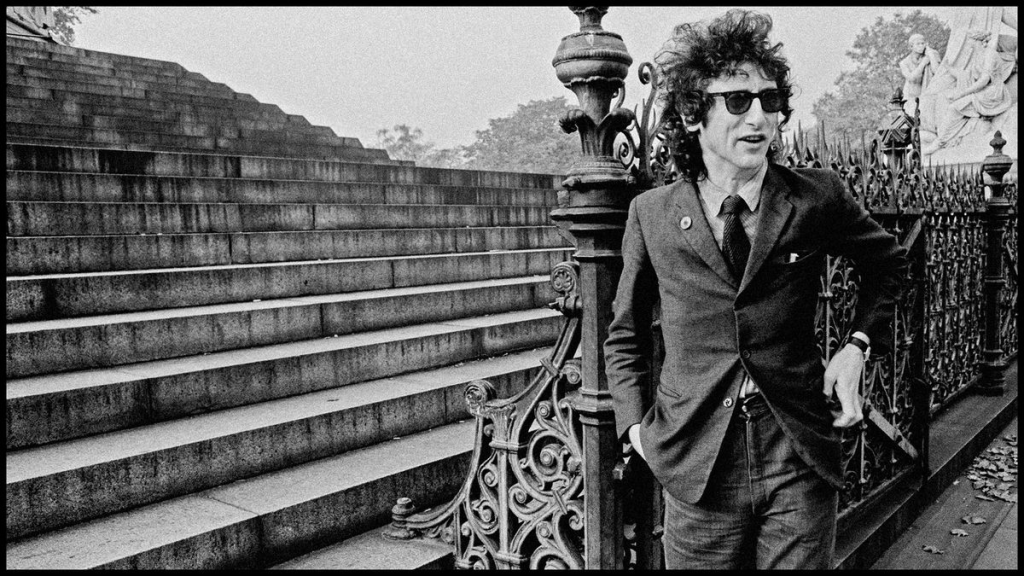
Cooper Clarke gives us a beautifully surrealistic way to comprehend the climate emergency in the sense of scattered particles of “poison sperm”. But a poet like Michael Symmons Roberts would be a counter-example of a slightly posher, less salvific “Manchester poet”. While Cooper Clarke captures the immediate bleakness of our moment, Symmons Roberts is able to create a slightly more panoramic view of our Northern soil, our Northern selves. In “You are free to go” in his 2021 collection, Ransom, Symmons Roberts offers us a bleak vision of our contemporary peregrinations, experimenting with according sacredness to the industrial earth upon which we tread:
Or those who walk to wire-hedged cliffs,
backpacks chiming with old coins,
who trust the birds’ instinctual paths,
and fly with seagulls, petrels, terns.
Now our mind-map runs
to pastel. Too many nights out soaked
in ditches, doorways, or hunched
in taprooms rehearsing plans and hopes.
Meanwhile, in Symmons Roberts’ Mancunia (2017), “Barefoot in Mancunia” traces a figure searching for the town’s centre of gravity:
So proud is he of his unofficial duty
that he cuts, stitches, dyes
a uniform befitting the role
of postman-to-the-places-noone-else-will-go
And Symmons Roberts is concerned with Manchester as a tapestry of liturgy, of prayers through gritted teeth; we glimpse this in “Mancunian Miserere”, where the disembodied speaker’s body is akin to the suffocated geography of Manchester. “Prise” and “praise” are antonyms and near homophones, which Symmons Roberts plays on, evoking the violence of worship:
and flood instead the cambers, ventricles, capillaries of me,
prise my teeth apart O God that I might learn to praise.
Symmons Roberts helps us to conceive alternatively of what Manchester poetry might be in the twenty-first century; perhaps something less personality-driven and more concerned with the raw materials of a strange, post-industrial city. John Cooper Clarke’s towering example of punk poetry should certainly not be written out, but I just want to posit that other Manchester poets might be getting us closer to the kind of tuning out that our contemporary ecological condition predicates.
This move away from a cult of personality might even create room for outsiders to offer a kind of Manchester eco-poetry. Perhaps this kind of eco-poetry would be blokish and familial while naturally-curious in the same measure, and perhaps we would give the reins to those who know the city well but are not “locals”. We might turn to Jason Allen-Paisant’s “Listen”, a poem in Allen-Paisant’s 2021 collection Thinking With Trees. Allen-Paisant is from Manchester, Jamaica, but now lives in Leeds and teaches at the University of Manchester. In “Listen”, Allen-Paisant is perceiving our own Northern English climes better than we can:
to the voice of the woods the chlorophyll
moving in the store box of the cedars
listen to the snakes of branches the weight
of water glistening on barks of birches
close eyelids and see dancing light
and shadow of dancing see footsteps
sliding over the litterfall a leaf
has scraped another
Or will Manchester allow Carol Ann Duffy to be a “Manchester poet”, given her long-standing connection with the North-West? In “Haworth”, Ann Duffy engages with the sinews and cobbles of the North-West. The moors are the mythological lore of Manchester:
I lie on my back. Two juggling butterflies are your smile.
The heathery breath of the moor’s simply your smell.
Your name sounds on the coded voice of the bell.
Cooper Clarke has created a stern mythology of a “Manchester poet”. But perhaps it is now time for us to reconsider how we might, ourselves, be Manchester poets, rather than following an act that cannot be followed.


Sam, Paul here. For what it’s worth I have met JCC more than once. The last time we met (gosh, it must have been more than a decade ago now) we realised that in 1968 we had been ad the same Ben E. King gig at Manchester’s now-legendary Twisted Wheel club. John’s ‘I Married a Monster from Outer Space’, in its 1978 version, has been one of my party pieces for a bloody long time!
Actually, my favourite poem by him is his ‘Haiku No.1’
To seize the moment
In seventeen syllables
Is very diffic
LikeLike
Yeah. Innit, on the last line.
Also, excellent poetry, and exegesis. Thank you.
LikeLike